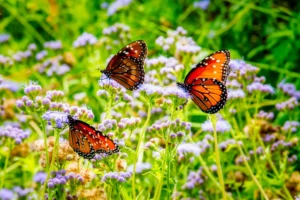
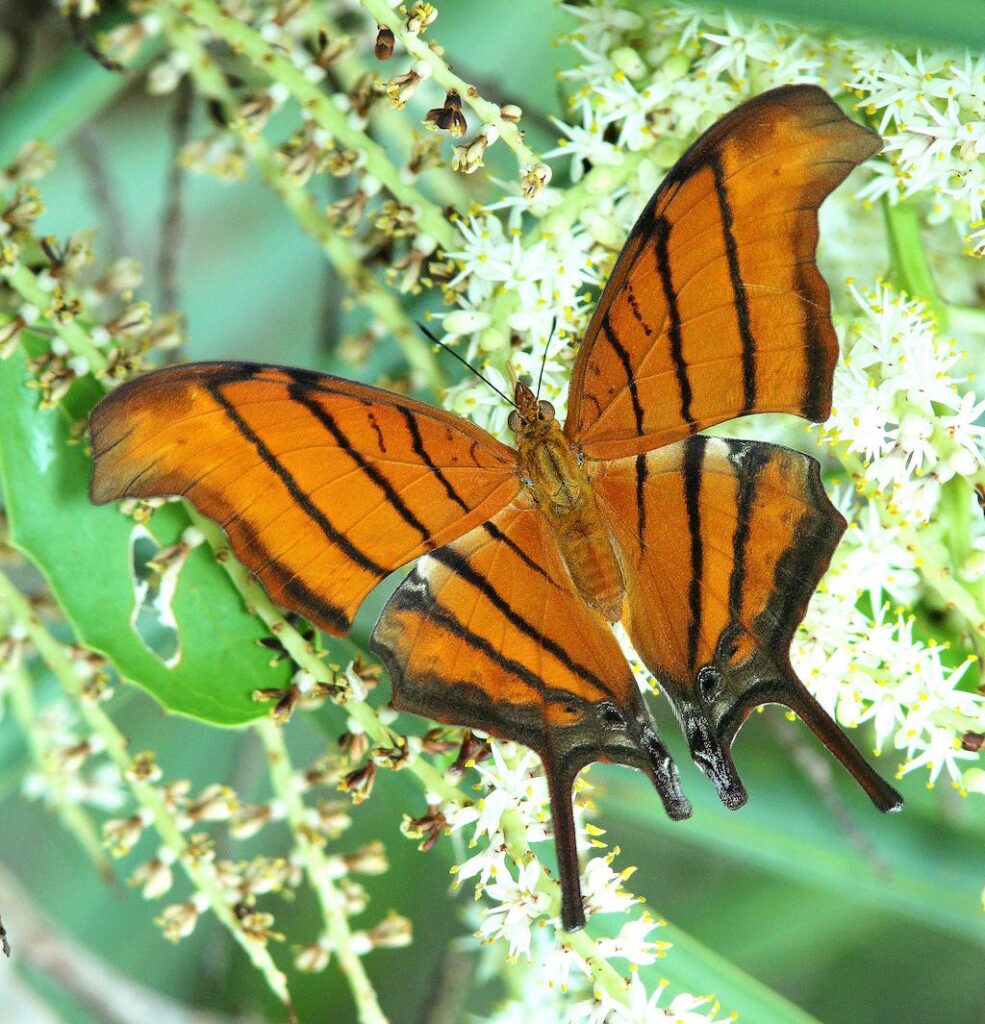
Seeing an orange and black butterfly in the garden always feels like a small event. It might drift past a patch of flowers, rest on a sunny leaf, or flash its wings so quickly that all you catch is a blur of warm orange and dark markings. The tricky part is that many butterflies share this same color palette.
That is why orange and black butterfly identification should never rely on color alone. The real clues are in the details: the black borders, wing veins, white dots, eyespots, silver markings, tail shape, flight style, and even the plants nearby.
Butterflies are an incredibly diverse group. The Smithsonian notes that there are about 17,500 butterfly species worldwide and around 750 species in the United States, which helps explain why many look similar at first glance.
This guide walks through some of the most common orange and black butterflies you may see, with simple field marks to help you tell them apart.
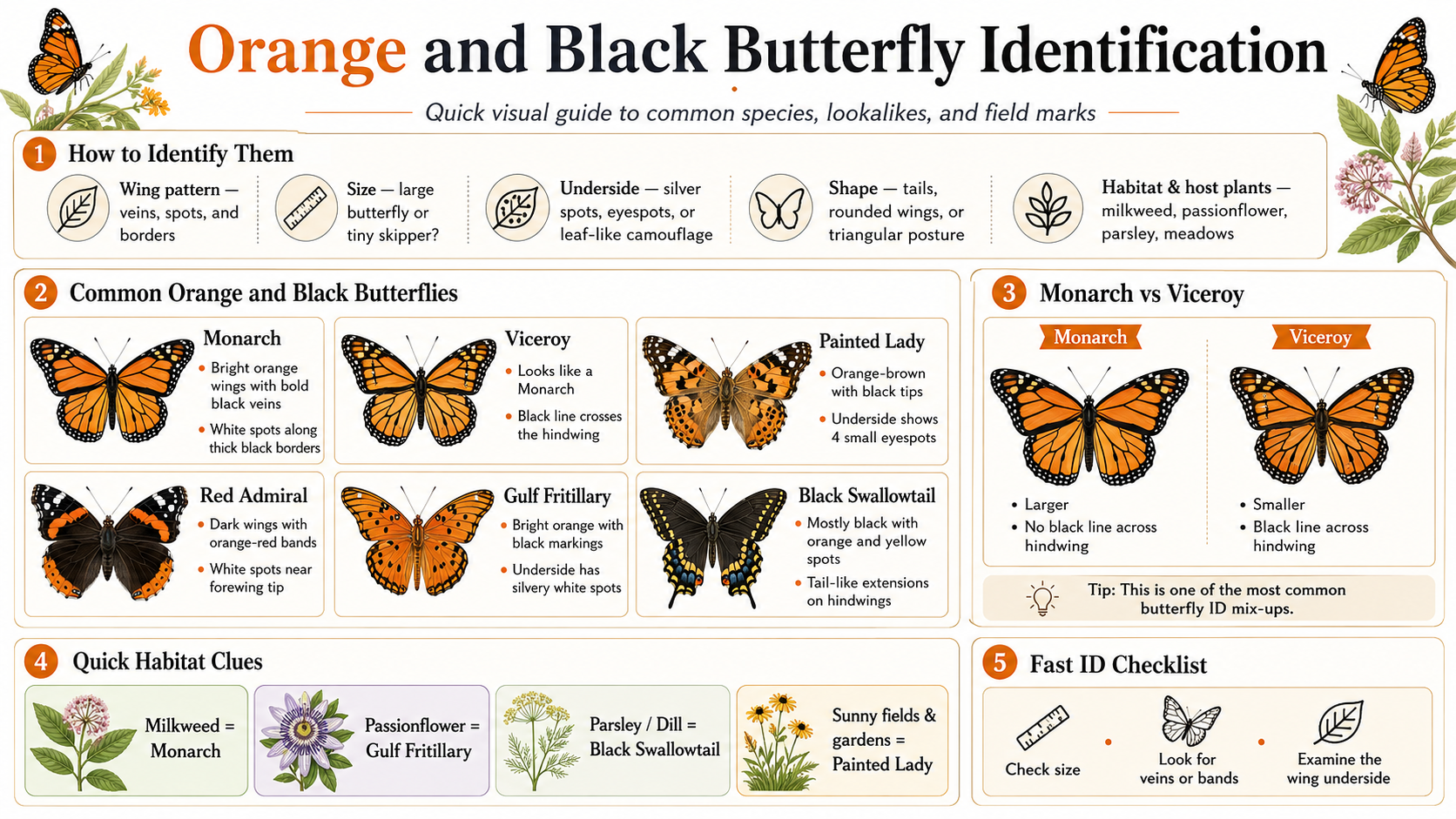
Orange and Black Butterfly Identification: Start With These Clues
Before trying to name the species, slow down and look for a few key features.
First, check the overall size. A large orange butterfly with strong black veins may point toward a Monarch, while a tiny fast-flying orange butterfly could be a skipper.
Next, look at the wing borders. Are the edges thick and black? Are there white dots along the border? Is there a dark line crossing the hindwing?
Then check the underside of the wings. Many butterflies look completely different when their wings are closed. Some have leaf-like brown undersides, while others show silver spots, eyespots, or pale markings.
Finally, pay attention to behavior and habitat. Some orange butterflies prefer open fields and roadsides. Others appear near wet woods, prairies, gardens, or host plants such as milkweed, violets, passionflower, or plants in the carrot family.
1. Monarch Butterfly
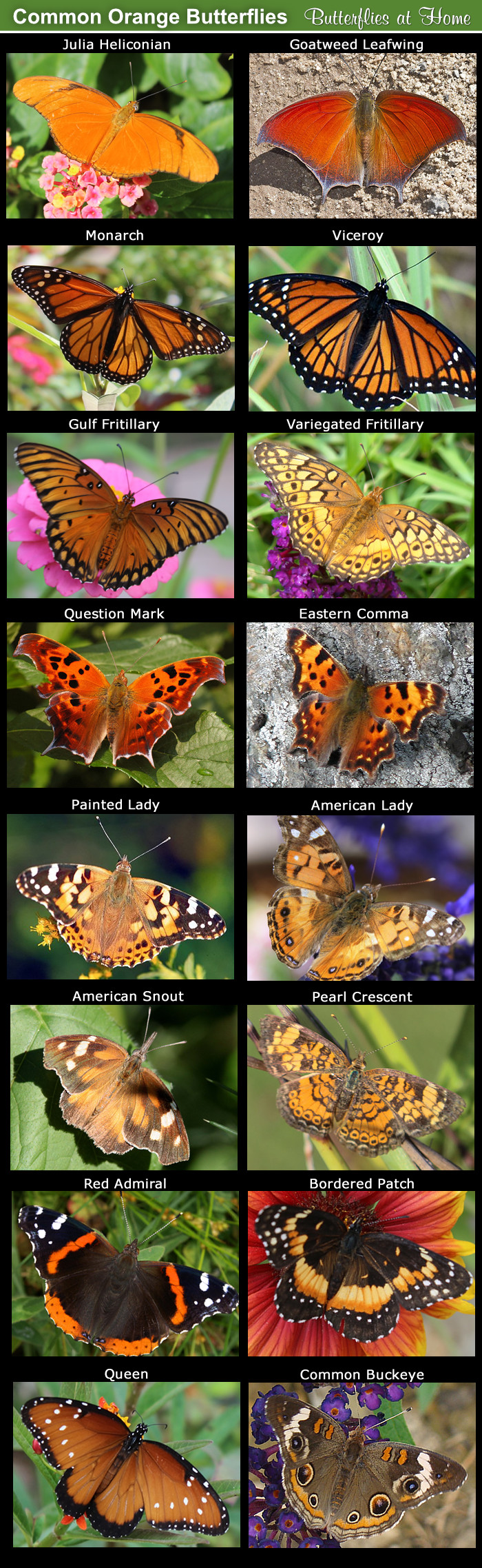
The Monarch butterfly is probably the most famous orange and black butterfly in North America. It has bright orange wings with bold black veins, thick black borders, and small white spots along the wing edges.
Male Monarchs usually have a small black scent patch on each hindwing, while females tend to have slightly thicker black veins. Monarchs are also known for their long seasonal migration, especially across North America.
One of the easiest ways to recognize a Monarch is to look for those clean black veins running across the orange wings. The pattern is strong, symmetrical, and almost stained-glass-like.
Monarch vs Viceroy
The Monarch is often confused with the Viceroy butterfly. The most important difference is that the Viceroy has a black line crossing the hindwing, while the Monarch does not. Journey North also notes that Viceroys are generally smaller than Monarchs.
Monarch caterpillars depend on milkweed, and conservation groups often recommend planting native milkweed to support Monarch habitat.
2. Viceroy Butterfly
The Viceroy looks very similar to the Monarch at first glance. It is orange and black, with a familiar wing shape and dark markings. But once you know what to look for, it becomes easier to separate the two.
The Viceroy has a clear black line running across the hindwing. This is the field mark most people use first. It also tends to be smaller than a Monarch.
Butterflies and Moths of North America describes the Viceroy as orange and black like the Monarch, but with that black line across the hindwing and a single row of white dots in the black marginal band.
3. Painted Lady
The Painted Lady is another common orange butterfly, but it has a softer, more mottled appearance than a Monarch. Its wings are orange-brown with black tips, white spots near the forewing tips, and patterned hindwings.
The underside is especially helpful for identification. Painted Ladies often show a pale brown and gray pattern with eyespots, which can make them look very different when resting with closed wings.
Painted Ladies are widespread and adaptable. They often appear in gardens, meadows, roadsides, and sunny open areas. If you see a medium-sized orange butterfly moving quickly from flower to flower, the Painted Lady is a strong possibility.
4. American Lady
The American Lady can look similar to the Painted Lady, but it has a useful identifying feature: two large eyespots on the underside of the hindwing.
This is one of the best field marks. Painted Ladies usually show more small eyespots, while American Ladies tend to show two larger ones. The American Lady also has orange, black, and white markings on the upper wings, with a neat and bright appearance.
If you are trying to separate these two, try to get a look at the underside. A quick photo can help a lot.
5. Red Admiral
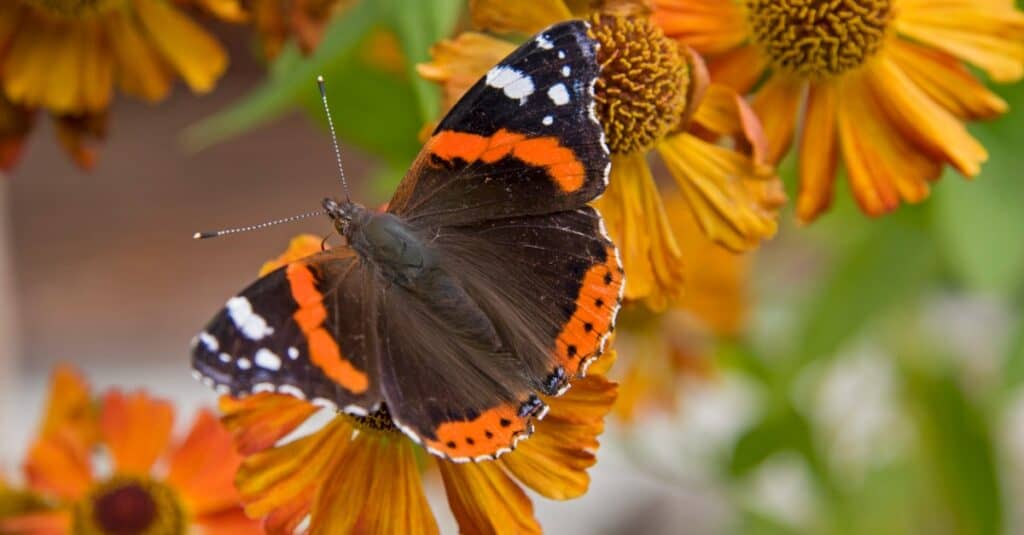
The Red Admiral is not fully orange, but it belongs in this guide because of its strong orange-red bands on dark wings. It has black or very dark brown wings, orange-red bands across the forewings and hindwings, and white spots near the forewing tips.
Butterflies and Moths of North America describes the Red Admiral as having a black upperside with white spots near the apex, a red median band on the forewing, and a red marginal band on the hindwing.
This butterfly often visits gardens, woodland edges, and moist places. It can also feed on tree sap and rotting fruit, not just nectar.
6. Gulf Fritillary
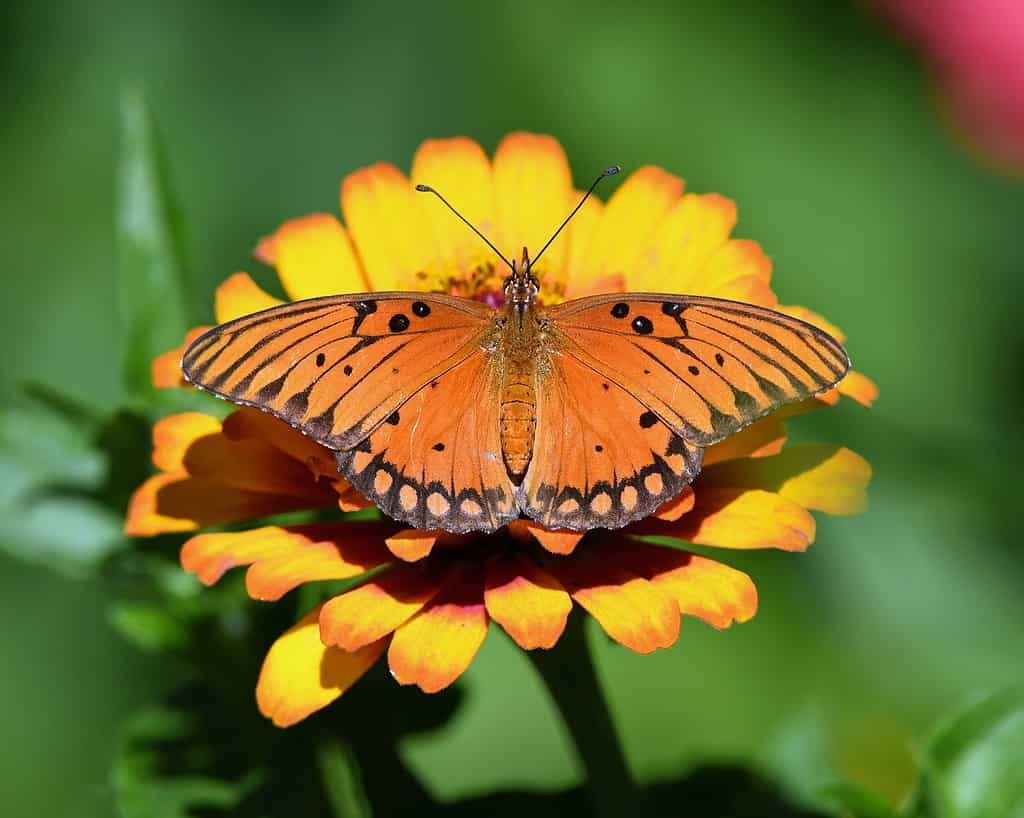
The Gulf Fritillary is one of the brightest orange butterflies you may see. Its upper wings are vivid orange with black markings, and the forewings often show three white spots surrounded by black.
The underside is even more distinctive. It has shiny silver-white spots that can look almost metallic in sunlight. This feature is one of the quickest ways to identify it.
Butterflies and Moths of North America describes the Gulf Fritillary as bright orange above with black markings and three black-encircled white dots on the forewing leading edge, while the underside has elongated iridescent silver spots.
7. Regal Fritillary
The Regal Fritillary is a dramatic orange and black butterfly associated with prairie habitats. The forewings are orange with black markings, while the hindwings are darker with rows of pale spots.
Nebraska Game and Parks describes the Regal Fritillary as having bright red-orange forewings with black markings and black hindwings with rows of white spots.
This species is especially tied to grasslands and prairie environments. Its larvae feed on violets, while adults visit flowers such as milkweeds, thistles, clover, and coneflowers.
8. Pearl Crescent
The Pearl Crescent is a small orange butterfly with black markings. It is common in many parts of North America and often appears in fields, roadsides, vacant lots, and open sunny spaces.
Its pattern can vary, which sometimes makes identification confusing. In general, look for a small orange butterfly with dark borders and fine black markings across the wings.
Compared with a Monarch or Gulf Fritillary, the Pearl Crescent is much smaller and less dramatic. It has a compact, checkered look rather than large stained-glass veins or silver markings.
9. Silvery Checkerspot
The Silvery Checkerspot is another orange butterfly with a patterned, checkered appearance. It is usually pale orange to yellow-orange with black borders and wavy dark markings.
The name comes from the pale or silvery markings on the underside. Like many checkerspots and crescents, this butterfly can be difficult to identify from a quick glance. A clear photo of both the upper and lower wings is very useful.
Look for a medium-small butterfly with a neat orange-and-black grid-like pattern, often around moist meadows, woodland edges, and open areas.
10. Black Swallowtail
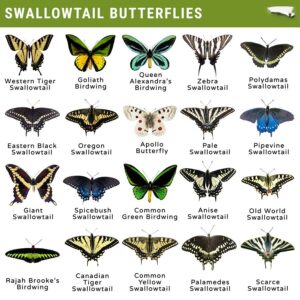
The Black Swallowtail is mostly black, but it has orange, yellow, blue, and red markings, so people often notice it when searching for black and orange butterflies.
It has a tail-like extension on each hindwing. The upper wings show rows of yellow spots, while the hindwings may have blue shading and orange-red spots.
The University of Wisconsin Extension describes adult Black Swallowtails as black butterflies with yellow, blue, orange, and red markings, including two rows of yellow spots on the upper surface and orange spots on the underside of the hindwings.
You may see Black Swallowtails near gardens, meadows, wetlands, and sunny open areas. Their caterpillars often feed on plants in the carrot family, including parsley, dill, fennel, carrots, and Queen Anne’s lace.
11. Orange Sulphur
The Orange Sulphur, also called the Alfalfa Butterfly, is usually yellow-orange rather than deep orange and black. Still, it often shows dark borders, especially when seen from above.
A useful clue is the dark spot on the forewing. Females may show pale spots within the dark wing border. The Alabama Butterfly Atlas describes the Orange Sulphur as having a yellow upper surface, a black spot on the center forewing, and dark borders that differ between males and females.
These butterflies are often seen in fields, roadsides, gardens, and open grassy areas. Their larvae feed on legumes, especially alfalfa and clovers.
12. Fiery Skipper
The Fiery Skipper is small, fast, and chunky compared with many other butterflies. It is orange to yellow-orange in males, while females are usually darker brown with orange markings.
Skippers often hold their wings in a distinctive angled position, which can make them look different from typical butterflies. They also have thick bodies and quick, darting flight.
Butterflies and Moths of North America notes that the Fiery Skipper has very short antennae; males have a wide black stigma, while females are dark brown above with an irregular orange band.
If you see a tiny orange butterfly zipping low over grass or flowers, it may be a skipper rather than a larger orange butterfly.
Quick Comparison: Common Orange and Black Butterflies
| Butterfly | Best Identification Clue | Common Habitat |
|---|---|---|
| Monarch | Orange wings with bold black veins and white-spotted borders | Fields, meadows, roadsides, milkweed patches |
| Viceroy | Monarch-like, but with a black line across the hindwing | Wetlands, willow areas, open habitats |
| Painted Lady | Orange-brown wings, black tips, white spots, mottled underside | Gardens, meadows, open sunny areas |
| American Lady | Two large eyespots on underside of hindwing | Fields, gardens, roadsides |
| Red Admiral | Dark wings with orange-red bands and white spots | Gardens, woodland edges, moist areas |
| Gulf Fritillary | Bright orange wings with black marks and silver underside spots | Gardens, warm open areas, passionflower vines |
| Regal Fritillary | Orange forewings, dark hindwings with pale spots | Prairies, meadows, grasslands |
| Pearl Crescent | Small orange butterfly with black checkered markings | Fields, vacant lots, open spaces |
| Silvery Checkerspot | Orange checkered wings with pale/silvery underside markings | Moist meadows, woodland edges |
| Black Swallowtail | Black wings with orange, yellow, blue, and red marks; tail-like hindwings | Gardens, meadows, open areas |
| Orange Sulphur | Yellow-orange wings with dark borders and a forewing spot | Fields, roadsides, clover and alfalfa areas |
| Fiery Skipper | Tiny orange skipper with thick body and fast darting flight | Lawns, gardens, grassy areas |
Why Orange and Black Butterflies Can Be Hard to Identify
Orange and black are common butterfly colors because wing patterns help with survival. Some butterflies use bright colors as warning signals. Others mimic toxic or unpleasant species to avoid predators. Some use duller undersides to blend into leaves, bark, or dead vegetation when resting.
This is why two butterflies may look similar in flight but completely different when photographed. A Monarch and Viceroy can fool beginners. A Painted Lady and American Lady may look nearly identical until you check the underside. A Red Admiral may seem black at first, but the orange-red bands reveal the species.
The best habit is to observe three things: upper wing pattern, underside pattern, and size. With those three clues, identification becomes much easier.
How to Photograph an Orange and Black Butterfly for Identification
You do not need a professional camera. A phone photo is often enough if it captures the right details.
Try to get one photo with the wings open and one with the wings closed. The open-wing view shows borders, veins, bands, and color blocks. The closed-wing view often reveals eyespots, silver spots, leaf-like patterns, or hidden markings.
Also photograph the plant if possible. Some butterflies are strongly linked to certain host plants. Monarchs are connected with milkweed, Gulf Fritillaries with passionflower, Black Swallowtails with carrot-family plants, and Orange Sulphurs with legumes.
If the butterfly flies away too quickly, write down what you noticed: size, color, white spots, tail shape, flight style, and location. These small notes can narrow the possibilities later.
How to Attract Orange and Black Butterflies to Your Garden
To attract butterflies, think beyond flowers. Adult butterflies need nectar, but caterpillars need host plants.
For Monarchs, native milkweed is essential because Monarch caterpillars feed on milkweed. Xerces recommends planting milkweed species native to your region to provide larval habitat.
For Black Swallowtails, consider parsley, dill, fennel, or other carrot-family plants. For Gulf Fritillaries, passionflower vines are important host plants. For many other butterflies, native wildflowers, reduced pesticide use, and a sunny sheltered garden can make a big difference.
A butterfly-friendly yard does not need to look wild or messy. Even a small sunny corner with native flowers, host plants, and no harsh insecticides can become a useful habitat.
Final Thoughts on Orange and Black Butterfly Identification
Orange and black butterflies are beautiful, but they can be surprisingly confusing. The best way to identify them is to move from the general to the specific.
Start with size. Then look at the black markings. Check for white spots, silver spots, eyespots, tails, and hindwing lines. Finally, consider where the butterfly is flying and what plants are nearby.
With a little practice, a passing orange blur becomes something more specific: a Monarch, Viceroy, Painted Lady, Gulf Fritillary, Red Admiral, Black Swallowtail, or one of the many smaller orange butterflies that brighten fields and gardens.
The more you look, the more details you notice. And once you start noticing those details, butterfly watching becomes much more rewarding.