
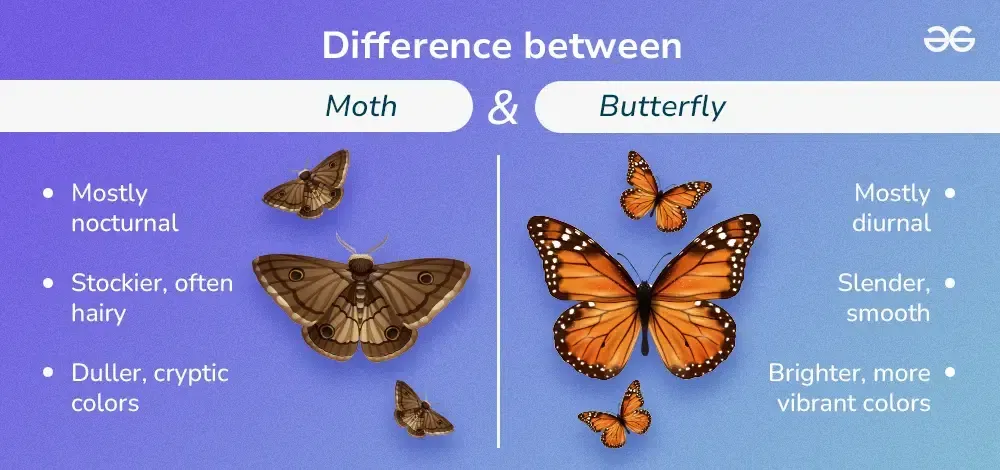
If you’ve ever paused in a garden or on a summer walk and wondered whether that fluttering insect was a butterfly or a moth, you’re not alone. Butterfly vs moth differences can seem obvious once you know what to look for, but in real life, the answer is not always as simple as “butterflies fly by day, moths fly by night.” Both belong to the order Lepidoptera, both have scaled wings, and both can play important roles as pollinators. The trick is to look at a few clues together rather than relying on just one.
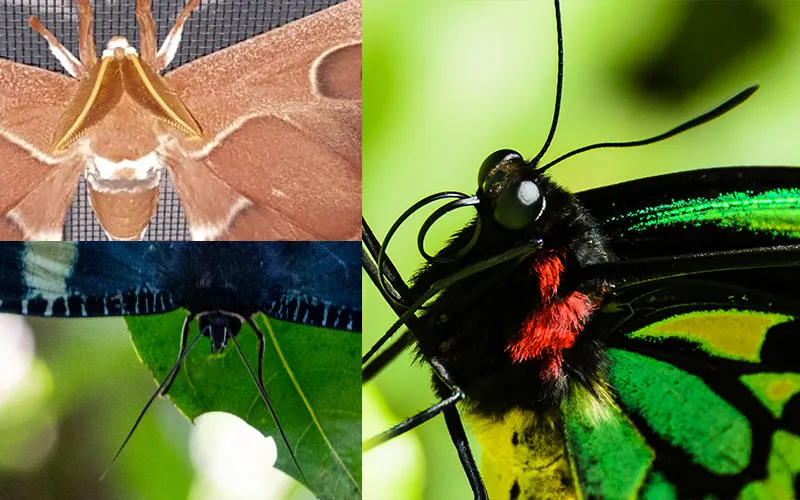
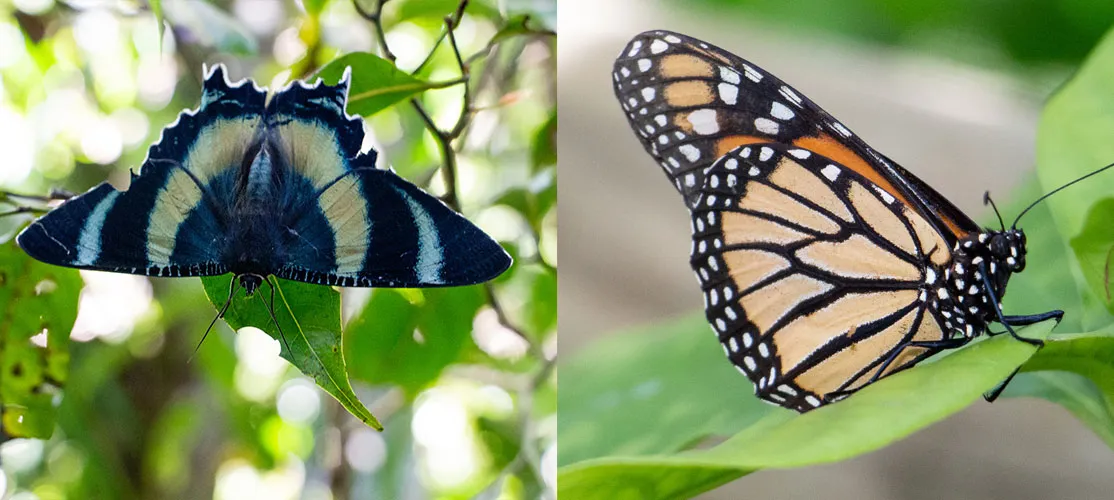
In everyday observation, the most helpful clues are the antennae, the way the wings are held at rest, body shape, activity time, and the kind of pupa the insect makes. None of these rules works perfectly every single time, but taken together, they usually make identification much easier.
Butterfly vs Moth Differences Often Start With the Antennae
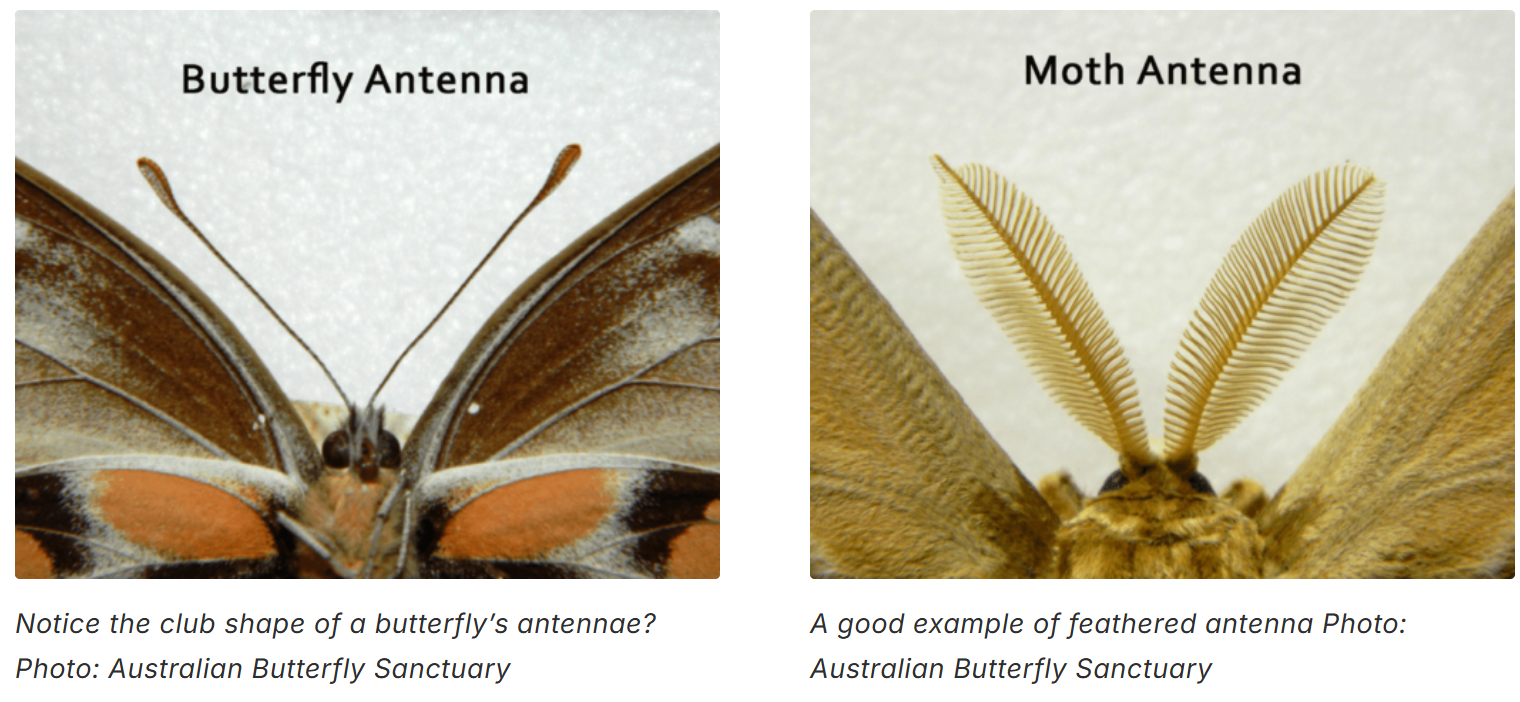
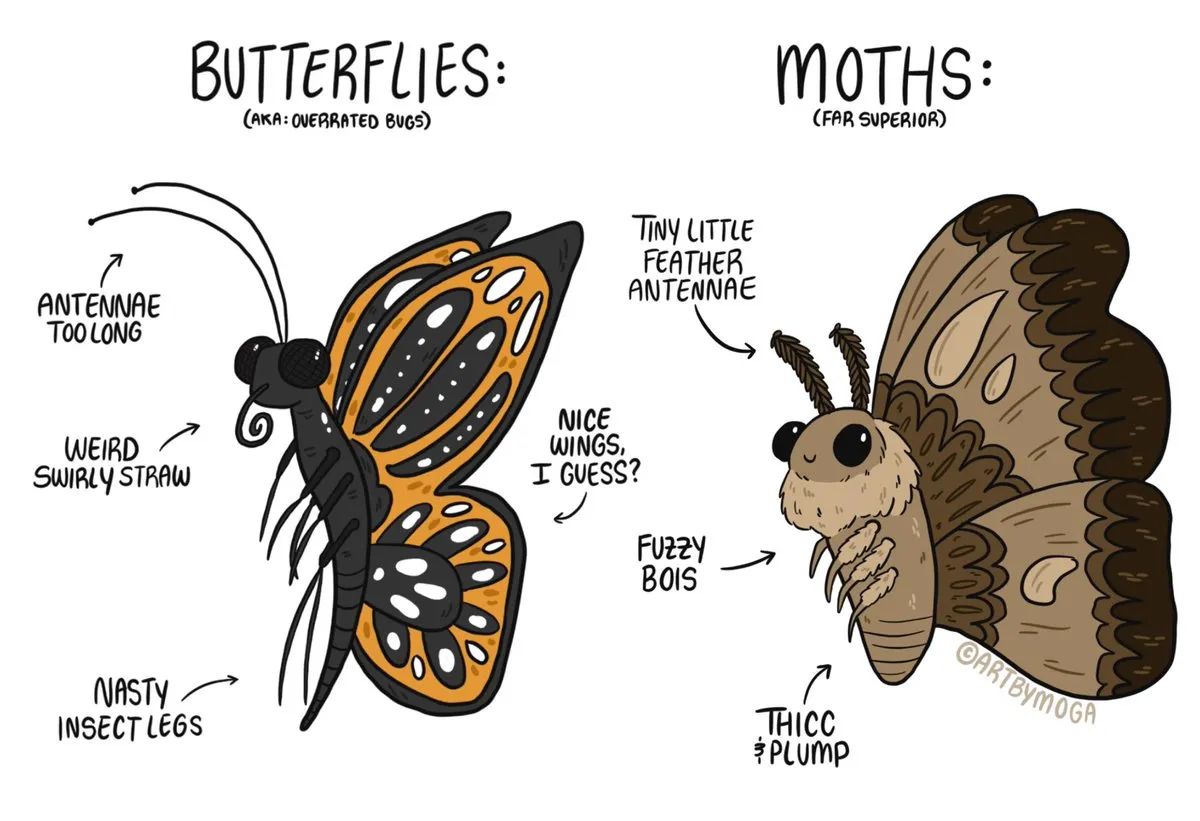
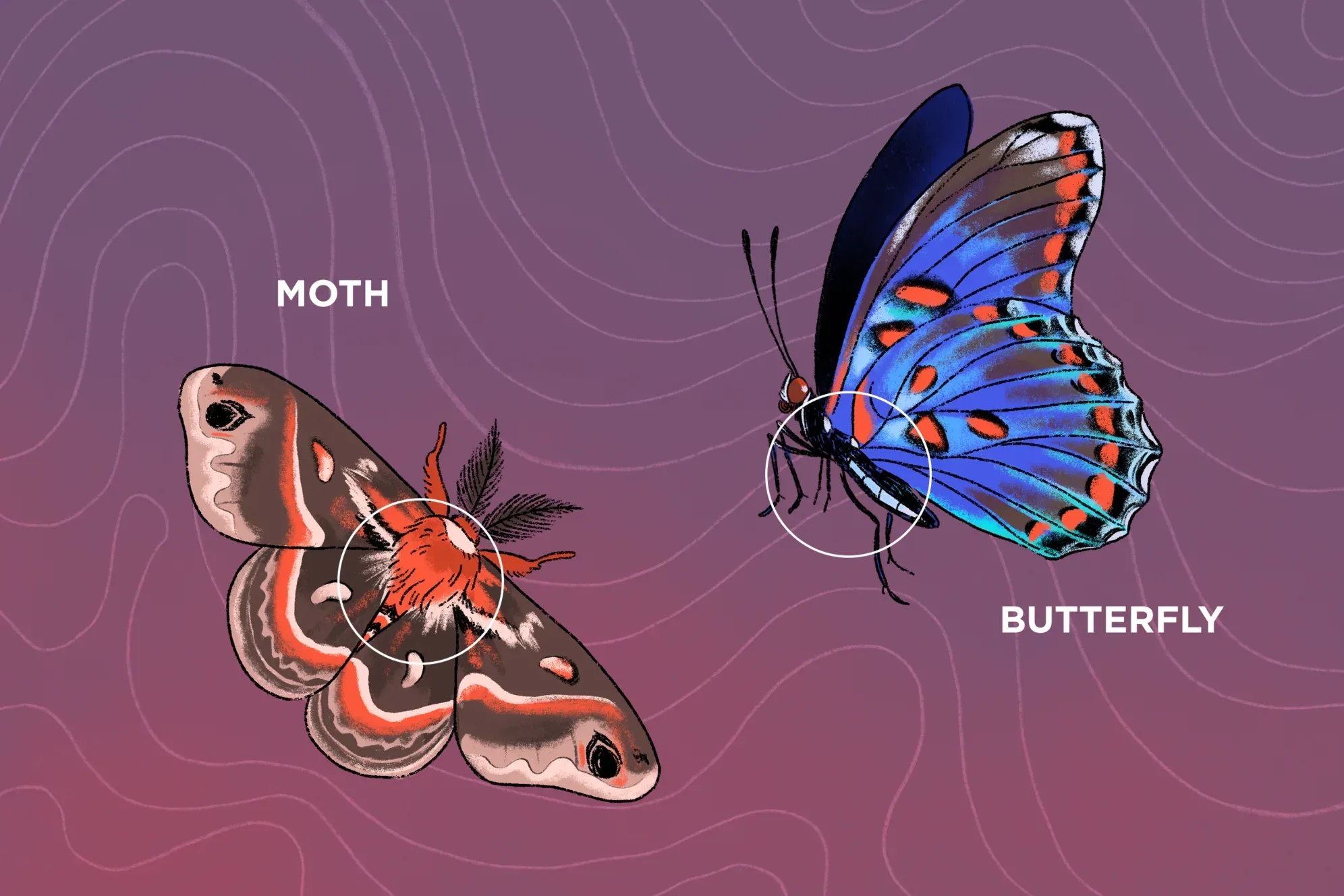
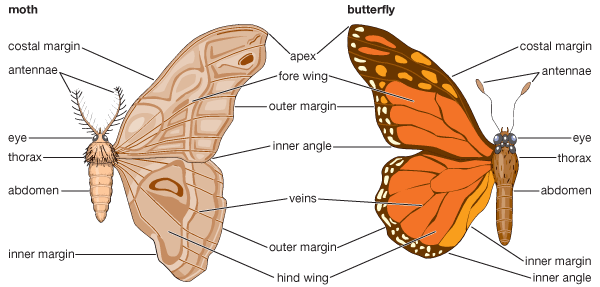
If you only remember one feature, make it the antennae. Butterflies usually have slim antennae with a distinct club at the tip. Moths, by contrast, usually have antennae that are feathery, tapering, comb-like, or threadlike, without that obvious clubbed end. This is one of the most reliable field marks for beginners.
That said, even this rule has exceptions. Some moths have more delicate antennae than people expect, and a few butterfly groups can look less obviously “clubbed” at first glance. So while antennae are a strong clue, it is still best to combine them with posture and behavior before making a final call.
Butterfly vs Moth Differences in Wing Position and Body Shape
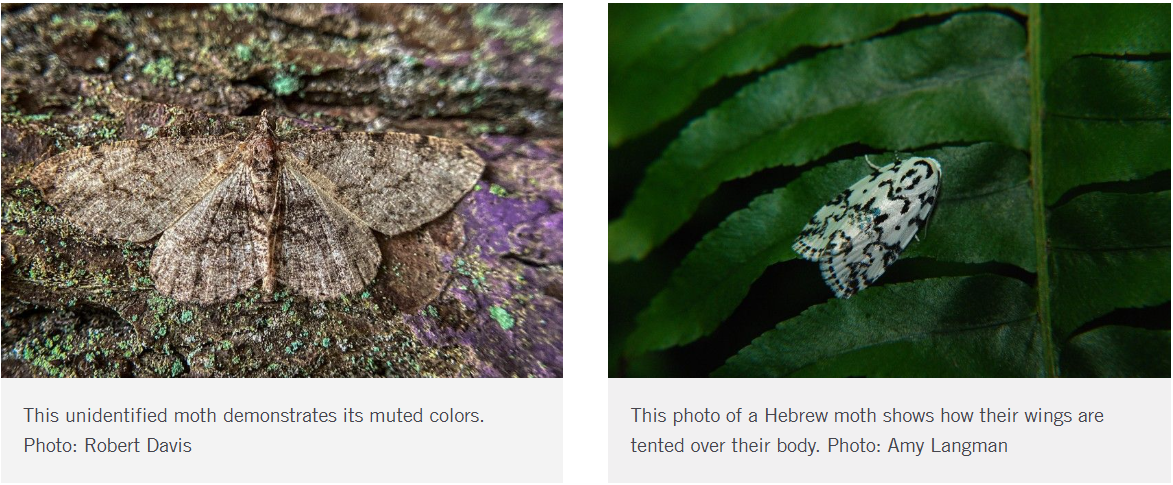
Another classic difference is how the insect rests. Most butterflies fold their wings vertically over their backs when they are still. Many moths rest with their wings spread flat or held roof-like over the body. If you see an insect perched quietly with wings upright, butterfly is often the better first guess.
Body shape can help too. Butterflies often look slimmer and cleaner-lined, while moths tend to look thicker, fuzzier, and more compact. That slightly fluffier look in moths is part of why many people describe them as “soft” or “dusty” compared with butterflies.
Still, this is where beginners can get tripped up. Some moths hold their wings in a butterfly-like way, and some butterflies, especially skippers, can rest at unusual angles. In other words, wing posture is useful, but not foolproof.
Butterfly vs Moth Differences in Activity, Color, and Behavior
The most popular rule is also the one that causes the most confusion: butterflies are generally diurnal, while moths are generally nocturnal. In broad terms, that is true. Butterflies are more often seen feeding and flying in sunlight, while many moths are most active after dark.
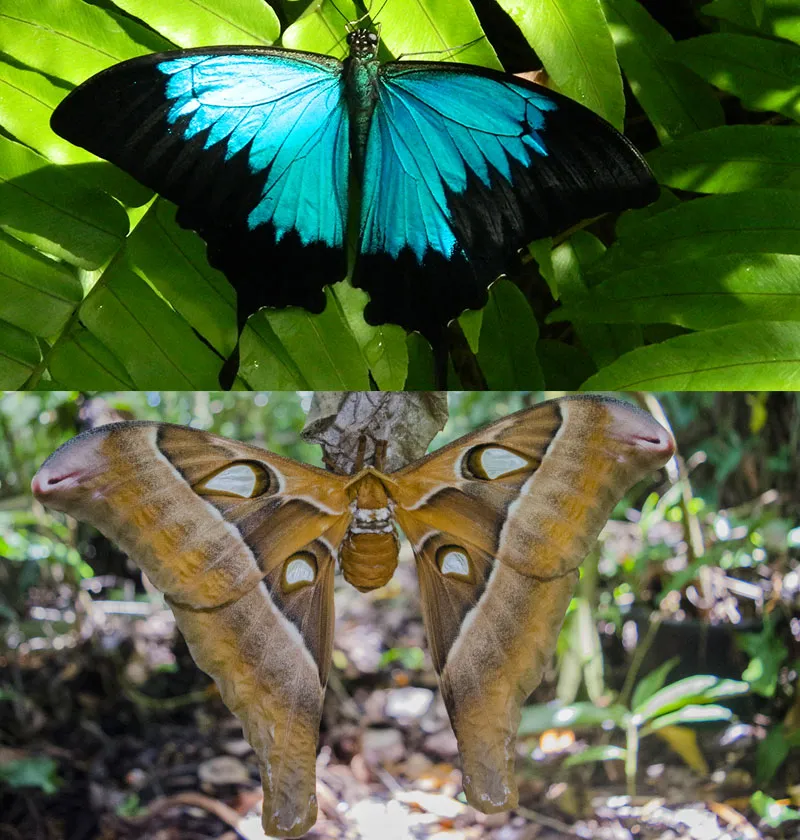
But “generally” matters here. There are day-flying moths, and not every butterfly neatly fits the daytime-only stereotype. So if you see an insect flying in the afternoon, that alone does not guarantee it is a butterfly. Activity pattern is best treated as a helpful hint, not a final verdict.
Color is similar. Butterflies are often associated with bright, bold wings, while moths are often thought of as brown, gray, or cream. That pattern exists, but it is far from universal. Plenty of moths are stunningly colorful, especially some day-flying species, and some butterflies are quite subdued. Color may catch your eye first, but it should never be your only identification tool.
Butterfly vs Moth Differences During Metamorphosis
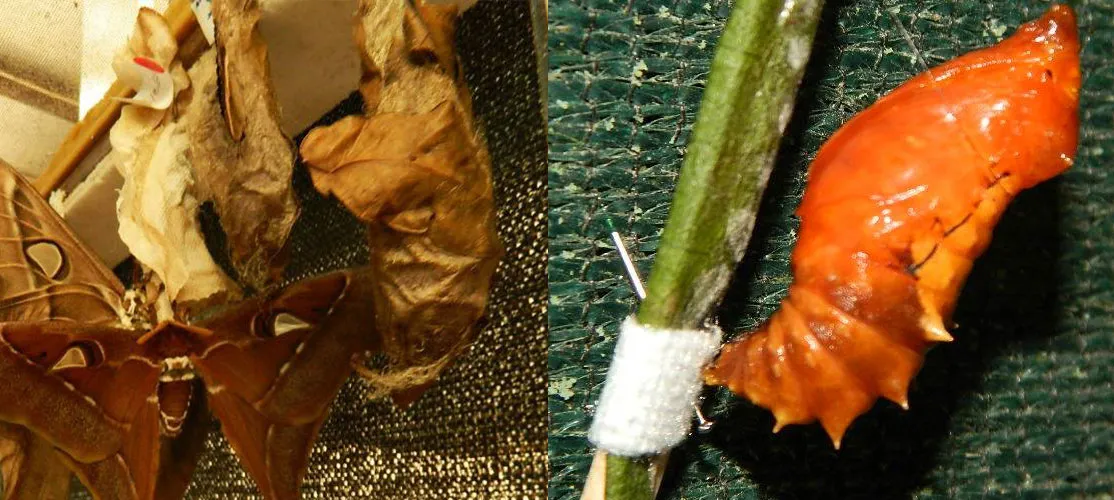
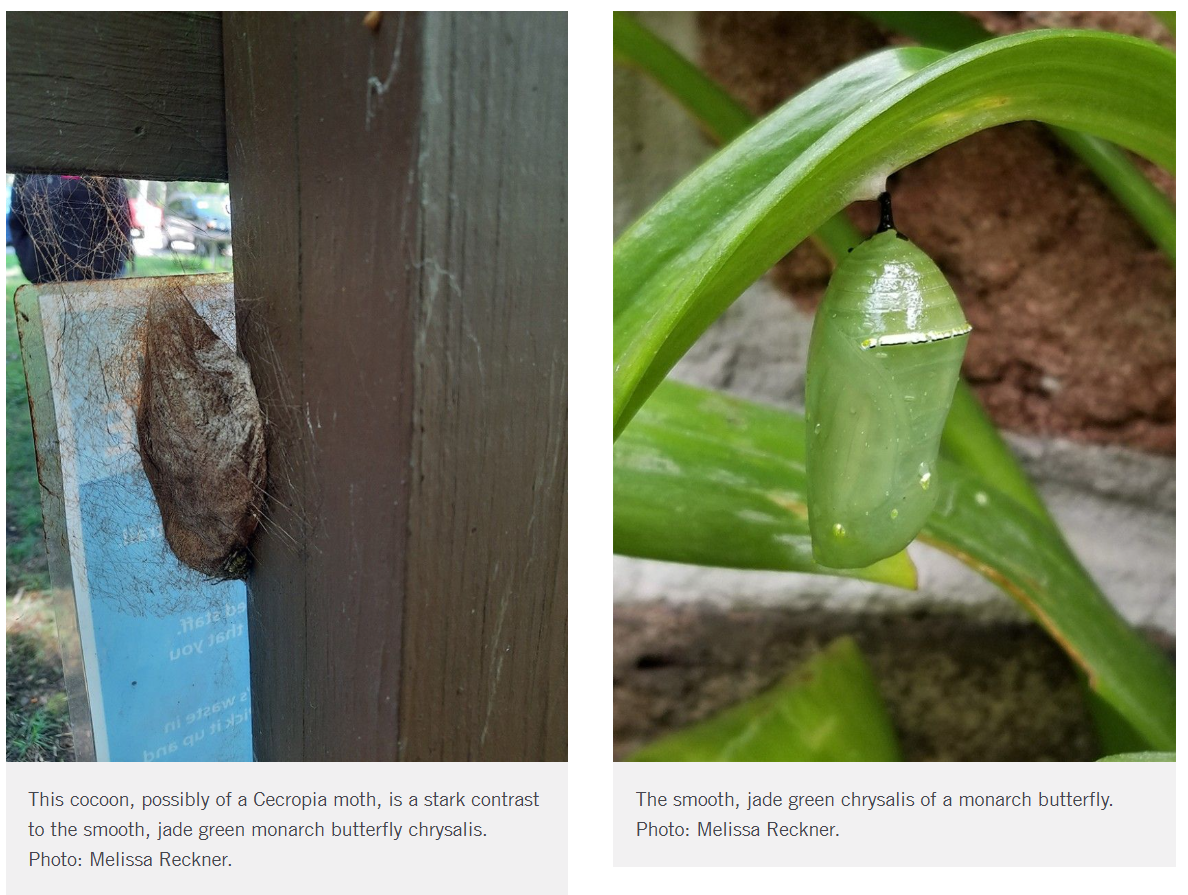
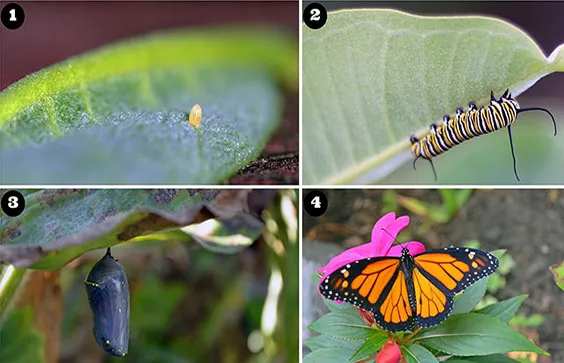
One of the clearest butterfly vs moth differences appears during the pupal stage. Butterflies usually form a chrysalis, which is a hard, exposed pupa. Moths more often spin a cocoon, typically made with silk, around the pupa. This is why people often say “butterfly chrysalis” and “moth cocoon.”
There is also a structural difference that is less obvious in casual observation: many moths have a wing-coupling structure called a frenulum that helps link the forewing and hindwing in flight, while butterflies generally do not. It is a real anatomical distinction, though it is not usually the first thing you would check in the field unless you are examining a specimen closely.
Why Butterfly vs Moth Differences Are Not Always Absolute
This is the part that surprises many people: from a scientific point of view, the line between butterfly and moth is not as neat as popular language makes it sound. Butterflies are part of Lepidoptera just like moths, and many of the familiar “differences” are better understood as rules of thumb than strict laws.
That is also why the best approach is practical rather than rigid. When you are trying to identify one in the garden, look at several traits together: antennae first, then wing posture, then body shape, then time of activity. The more clues point in the same direction, the more confident you can be.
Butterfly vs Moth Differences in Diversity and Ecology
There is another reason moths are easy to underestimate: there are far more of them. Smithsonian notes roughly 160,000 moth species worldwide compared with about 17,500 butterfly species, and Britannica places the whole order Lepidoptera at around 180,000 species. So while butterflies tend to get more public attention, moths represent the much larger share of the group.
Ecologically, both matter. Adults in both groups can pollinate flowers, and both butterflies and moths are part of food webs that support birds, bats, and other wildlife. So even if one seems more glamorous than the other, both are worth noticing.
Final Thoughts on Butterfly vs Moth Differences
The easiest way to think about butterfly vs moth differences is this: butterflies usually have clubbed antennae, slimmer bodies, and upright resting wings, while moths usually have non-clubbed antennae, stockier bodies, and flatter resting wings. Butterflies are usually day-active; moths are usually night-active. Butterflies usually form a chrysalis; moths usually spin a cocoon. Useful rules, yes. Perfect rules, no.
And honestly, that is part of the charm. The closer you look, the less these insects fit into tidy little boxes. What starts as a simple question turns into something more interesting: not just how to tell them apart, but how much variety exists inside a single order of insects.
FAQ
What is the main difference between a butterfly and a moth?
The easiest and most reliable visual clue is usually the antennae. Butterflies typically have clubbed antennae, while moths usually have tapering, feathery, comb-like, or threadlike antennae without a clubbed tip.
Are all moths nocturnal and all butterflies diurnal?
No. Most butterflies are active during the day and many moths are active at night, but there are day-flying moths and occasional exceptions among butterflies as well.
Do butterflies and moths both pollinate flowers?
Yes. Both can act as pollinators, although they often do so at different times and in different ecological contexts.
Is a chrysalis the same as a cocoon?
Not exactly. A chrysalis is the butterfly’s pupal stage itself, usually exposed and firm. A cocoon is a silk casing that many moth caterpillars spin around the pupa.
Are moths more common than butterflies?
Yes, by a wide margin. There are far more described moth species than butterfly species worldwide.