The Brimstone Butterfly is one of those insects people tend to remember the moment they see it. After a long, grey winter, that sudden flash of lemon-yellow moving along a hedge or woodland edge feels almost symbolic, as if spring has finally decided to arrive.
It is not just a beautiful butterfly. The Brimstone is also one of the most fascinating species in Europe because of how it survives the cold, how long it lives, and how closely its life is tied to a few humble shrubs. If you have ever wondered where the Brimstone Butterfly lives, how rare it is, or why it appears so early in the year, this guide brings everything together in one place.
What Is the Brimstone Butterfly?
The Common Brimstone Butterfly (Gonepteryx rhamni) is a medium-to-large butterfly found across much of Europe, as well as parts of North Africa and Asia. It is especially well known in the UK, where it is one of the earliest butterflies to appear in spring.
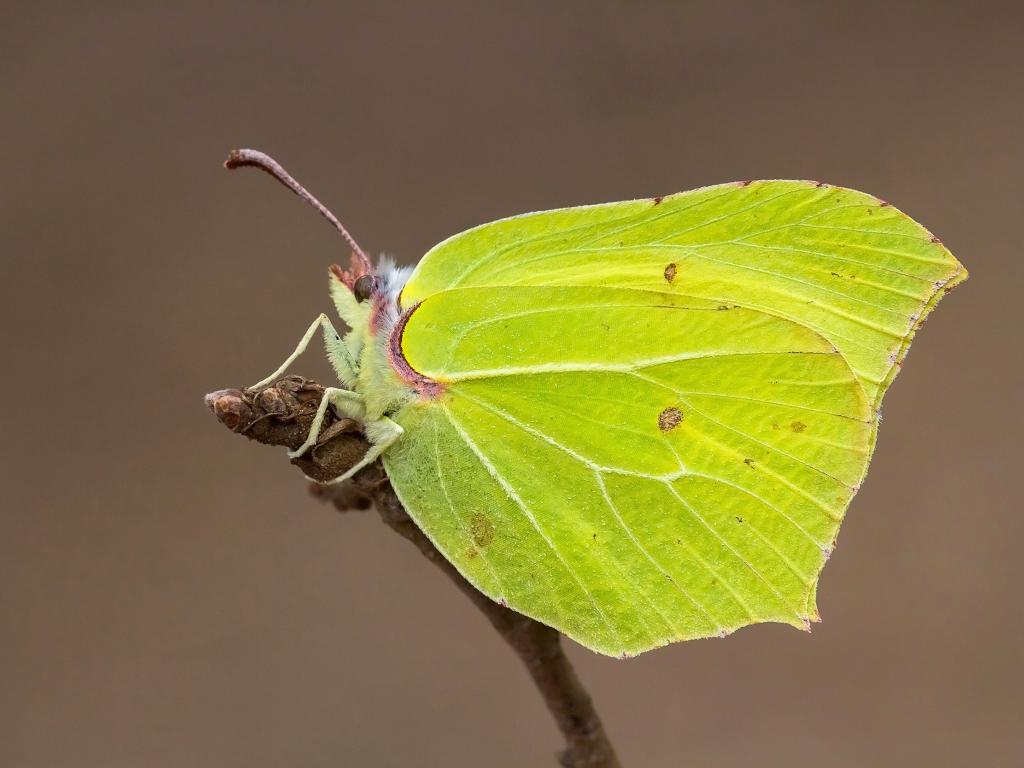
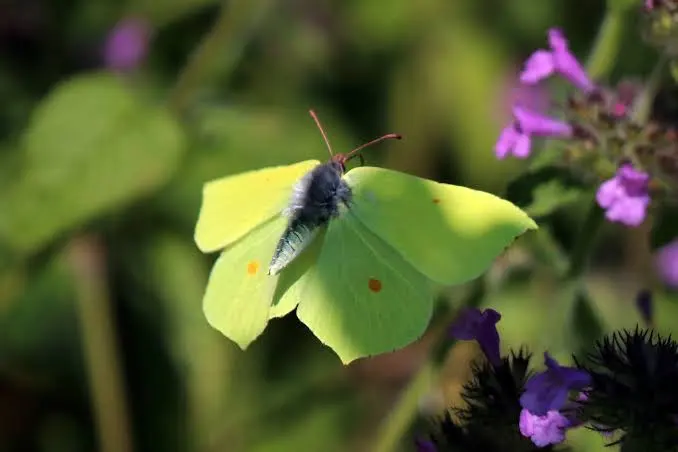
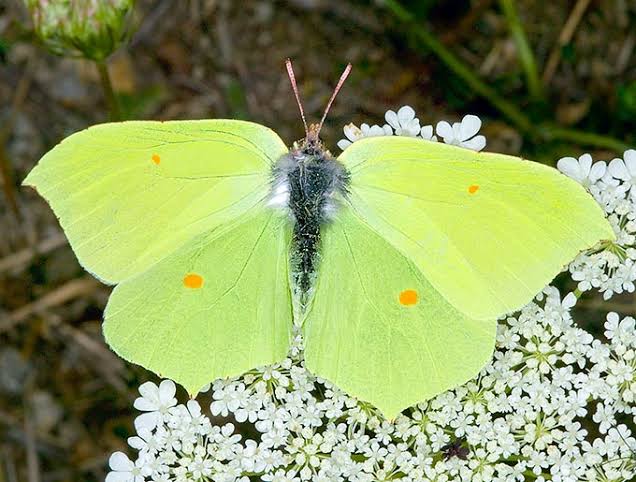
Many people recognize the male immediately because of his vivid sulphur-yellow wings. The female is softer in tone, with pale greenish-white wings that blend beautifully into surrounding leaves. Together, they are a wonderful example of how striking and subtle nature can be at the same time.
The Brimstone is often celebrated as a messenger of spring, and that reputation is well deserved. On the first warm days of late winter or early spring, it may already be on the wing while many other butterflies are still absent.
What Does a Brimstone Butterfly Look Like?
One of the most distinctive things about the Brimstone Butterfly is its shape. Its wings are sharply pointed and leaf-like, which gives the butterfly excellent camouflage when resting among branches or foliage.
A few key features make it easy to identify:
- Male Brimstone Butterfly: bright yellow, almost glowing in sunshine
- Female Brimstone Butterfly: much paler, with a greenish-white cast
- Wingspan: up to around 6 cm
- Wing shape: angular and leaf-shaped
- Markings: a small orange spot on each wing
That leaf mimicry is more than decorative. It helps protect the butterfly from predators, especially during its long resting periods. When settled with wings closed, a Brimstone can look surprisingly like a real leaf.
Where Are Brimstone Butterflies Found?
The Brimstone Butterfly range stretches across a broad Palearctic area, including much of Europe, parts of North Africa, and areas of Asia. Even so, its distribution is not completely uniform. It is often common in one region and scarce in another, depending on habitat.
In the UK, Brimstones are more widespread in southern England and Wales, while they become less common farther north. In Ireland, they are much more localized and strongly linked to areas where their food plants grow.
You are most likely to see Brimstones in places such as:
- woodland edges
- hedgerows
- gardens
- scrubby countryside
- wetlands and fens near host plants
- calcareous or lime-rich soils where buckthorn species occur
This is important: Brimstones are not simply found anywhere with flowers. Their breeding distribution is closely tied to the presence of their larval host plants, especially alder buckthorn (Frangula alnus) and common buckthorn (Rhamnus cathartica).
Are Brimstone Butterflies Rare?
This is one of the most common questions people ask, and the answer is a little nuanced.
The Brimstone Butterfly is not generally considered rare, but it can be quite patchy in distribution. In areas where suitable buckthorn species are abundant, it may be a familiar sight. In other places, even within the same country, it can be scarce or absent.
So the best way to describe it is this: the Brimstone is widespread but localized.
Its numbers depend heavily on whether the right breeding plants are available. Without those plants, the butterfly cannot complete its life cycle, no matter how attractive the wider habitat may look.
Why Is the Brimstone Butterfly Seen So Early in Spring?
One reason the Brimstone feels so special is timing. It often appears earlier than many other butterflies, sometimes as early as February or March on mild, sunny days.
The reason is remarkable: the Brimstone hibernates as an adult butterfly.
Most butterflies survive winter as eggs, caterpillars, or pupae. The Brimstone takes a different route. It spends the cold months already fully winged, tucked away in shelter among ivy, branches, dry leaves, or dense vegetation. Then, as soon as temperatures rise, it becomes active again.
This strategy is why the species is so strongly associated with spring. You are not seeing a butterfly that has just emerged from a chrysalis. You are seeing one that has already survived an entire winter.
How Does the Brimstone Butterfly Survive Winter?
The Brimstone is one of the most cold-tolerant butterflies in Europe. It can withstand freezing conditions thanks to a combination of behavior and physiology.
Its survival toolkit includes:
- entering a dormant state during winter
- choosing sheltered hiding places
- reducing water content in the body
- producing compounds such as glycerol that act like a natural antifreeze
- using protective proteins that help prevent cellular damage in freezing conditions
These adaptations allow the Brimstone to survive temperatures far below what most people would expect a delicate butterfly to endure.
It is one of the clearest examples of how insects can be both fragile-looking and incredibly resilient.
Brimstone Butterfly Life Cycle
The Brimstone Butterfly life cycle is unusual because so much of the adult stage is spent in dormancy.
1. Mating in Spring
After emerging from winter shelter, males begin flying on warm spring days in search of females. This usually happens from late February or March into April, depending on local weather.
2. Egg Laying
Females lay single eggs on the tender buds or leaves of alder buckthorn and common buckthorn. This usually happens in April and May, when the host plants are producing suitable fresh growth.
3. Caterpillar Stage
The caterpillars are green and very well camouflaged. They often rest along the midrib of leaves, which makes them surprisingly hard to spot. They feed on buckthorn leaves for around three to five weeks.
4. Pupa Stage
Once fully grown, the caterpillar pupates on or near the host plant. The chrysalis is pale green and also blends well into its surroundings. After roughly 10 to 14 days, the adult butterfly emerges.
5. Summer Adult Stage
New adults usually appear from early July onward. But unlike many butterflies, they do not normally breed straight away. Instead, they enter a reproductive pause known as diapause.
6. Hibernation
After feeding and building energy reserves, the butterflies settle into shelter and overwinter as adults. The following spring, the cycle begins again.
What Is the Lifespan of a Brimstone Butterfly?
The Brimstone Butterfly lifespan is one of its most impressive features. Adults can live for around 10 to 13 months, making the Brimstone one of the longest-lived butterflies in Europe.
That is extraordinary when compared with many other butterfly species, whose adult lives may last only a few weeks.
Most of this long life is not spent in active flight, though. A large portion is taken up by dormancy, especially overwintering. Even so, it is still a major reason the Brimstone stands out among butterflies.
Why Host Plants Matter So Much
If there is one ecological detail worth remembering about the Brimstone, it is this: no buckthorn, no Brimstone.
The caterpillars depend on alder buckthorn and common buckthorn. Females carefully place eggs where newly hatched larvae will have immediate access to the right leaves. This close relationship means that even if a landscape has nectar flowers, hedges, and sunshine, it may still not support breeding Brimstones unless the right shrubs are present.
This is why habitat conservation matters so much for the species. Protecting small, overlooked plants can be just as important as protecting large landscapes.
Why the Brimstone Butterfly Still Feels Special
Even in places where the species is not considered rare, the Brimstone has a presence that feels memorable. Perhaps it is the timing. Perhaps it is the male’s brilliant yellow against still-bare branches. Or perhaps it is the fact that this butterfly carries a quiet story of endurance through winter, heat, shelter, and renewal.
Either way, the Brimstone is more than a pretty spring insect. It is a small marvel of adaptation, shaped by climate, plants, timing, and survival in ways that reward a closer look.
Final Thoughts
The Brimstone Butterfly is one of the most distinctive butterflies in Europe for good reason. It is long-lived, frost-tolerant, beautifully camouflaged, and deeply tied to its habitat. Its appearance in early spring is not just visually striking. It reflects an entire life strategy built around surviving the harshest part of the year and reappearing when the season begins to soften.
Once you know its story, the next sighting feels different. It is no longer just a yellow butterfly crossing a path. It is a survivor of winter and one of nature’s clearest signals that spring is on the way.
FAQ
Is the Brimstone Butterfly rare?
No, the Brimstone Butterfly is not usually considered rare, but it is often patchy in distribution. It is most common where alder buckthorn or common buckthorn grow.
Where can I see a Brimstone Butterfly?
You may spot Brimstones along woodland edges, hedgerows, gardens, scrubland, and other places near their host plants. In the UK, they are more common in southern England and Wales.
What do Brimstone Butterfly caterpillars eat?
Brimstone caterpillars feed mainly on alder buckthorn and common buckthorn. These plants are essential to the butterfly’s breeding cycle.
Why do Brimstone Butterflies appear so early in spring?
They appear early because they hibernate as adult butterflies. As soon as a warm spell arrives, they can wake and begin flying.
How long does a Brimstone Butterfly live?
A Brimstone Butterfly can live for around 10 to 13 months, which is unusually long for a butterfly.
How do Brimstone Butterflies survive winter?
They survive winter by entering dormancy in sheltered places and using natural antifreeze compounds such as glycerol, along with other physiological adaptations that protect them from freezing.
What color is a Brimstone Butterfly?
Male Brimstones are bright sulphur-yellow, while females are much paler and often look greenish-white.