Some butterflies seem made for summer footpaths and open grassland, and the Common Blue is one of them. In Britain and Ireland, it is the most widespread blue butterfly, usually found in sunny grassy places where its foodplants are growing. Known scientifically as Polyommatus icarus, it is a small species, but it has a quiet charm that makes it memorable once you notice it properly.
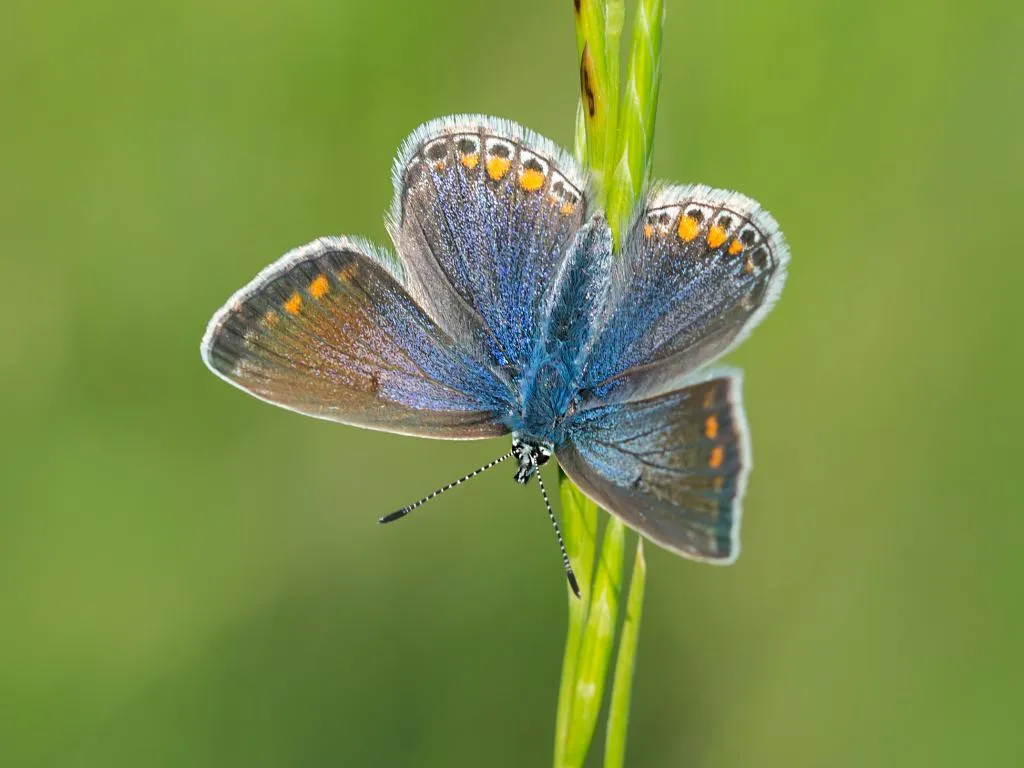
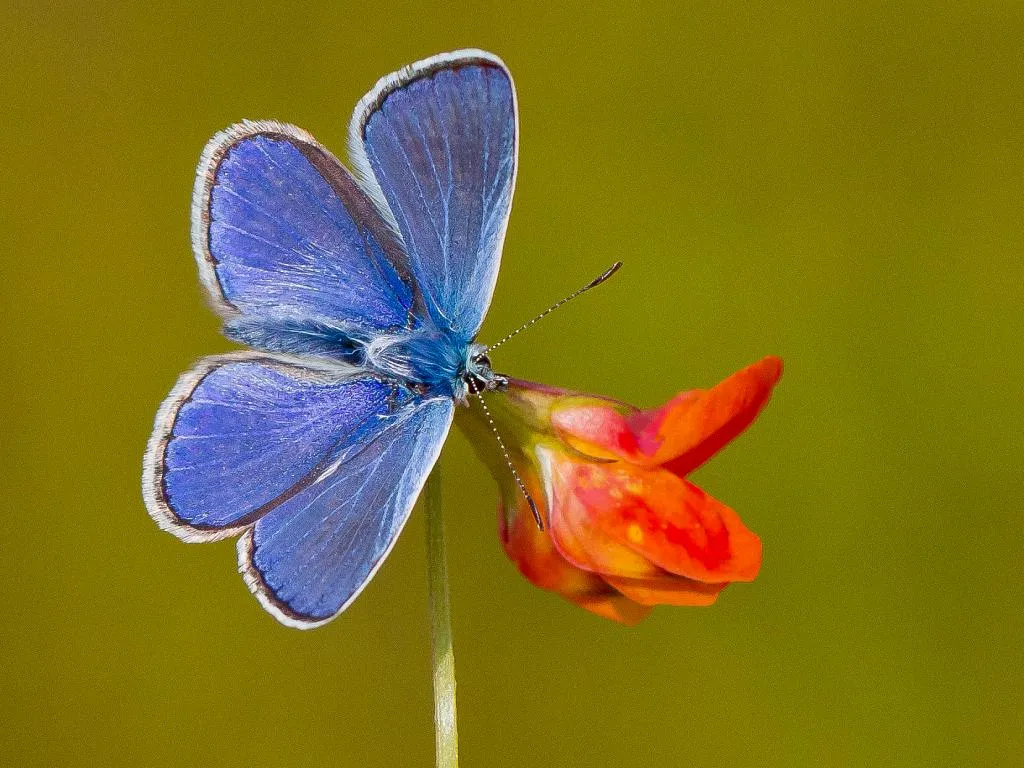
The males are often the first to catch your eye, glowing a clean, bright blue when they open their wings in the sun. Females are more variable and often more subtle, usually brown with some blue dusting near the body or across part of the wings. That contrast between the sexes is one of the reasons the Common Blue is such a satisfying butterfly to learn.
What Is the Common Blue Butterfly?
The Common Blue belongs to the Lycaenidae family and is a small butterfly with a wingspan of about 29 to 36 mm. It is widespread across the UK, though absent from the Shetland Islands, and it also occurs far beyond Britain and Ireland, ranging across much of Europe and into Asia. That broad range helps explain why it appears in so many different landscapes.
Even so, this is not a butterfly that belongs only to remote or dramatic places. You might see it on downland, coastal dunes, road verges, woodland clearings, rough grassland, old quarries, waste ground, and even parks or larger gardens when the conditions are right.
How to Identify a Common Blue Butterfly
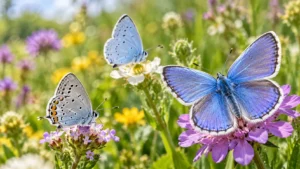
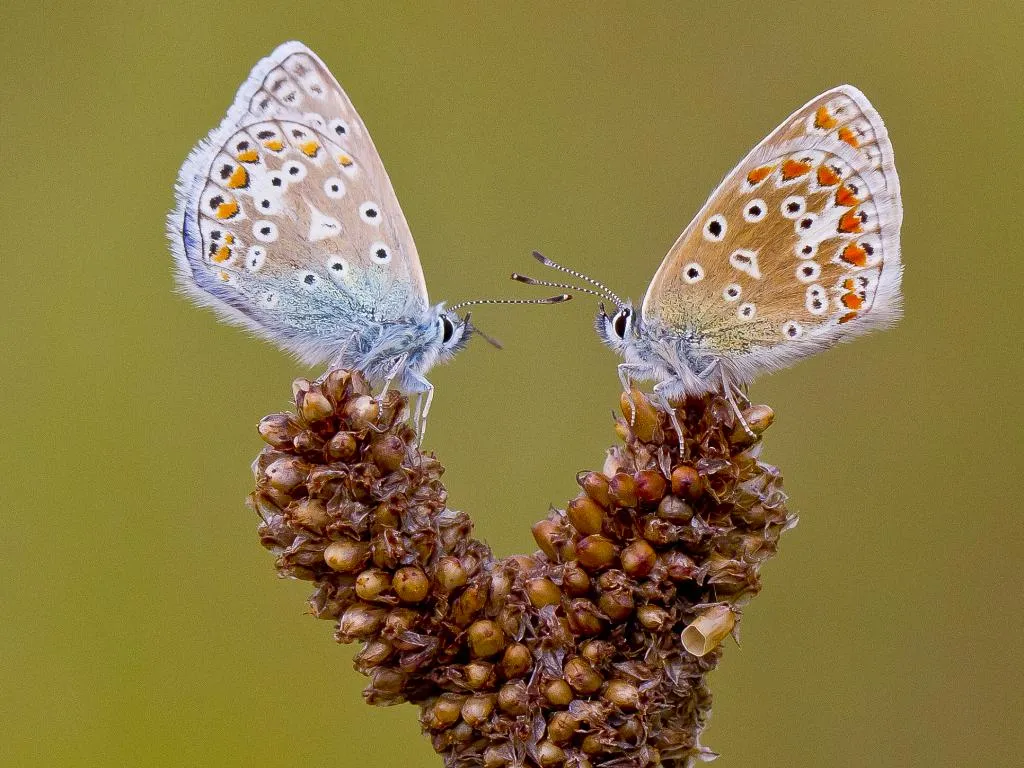
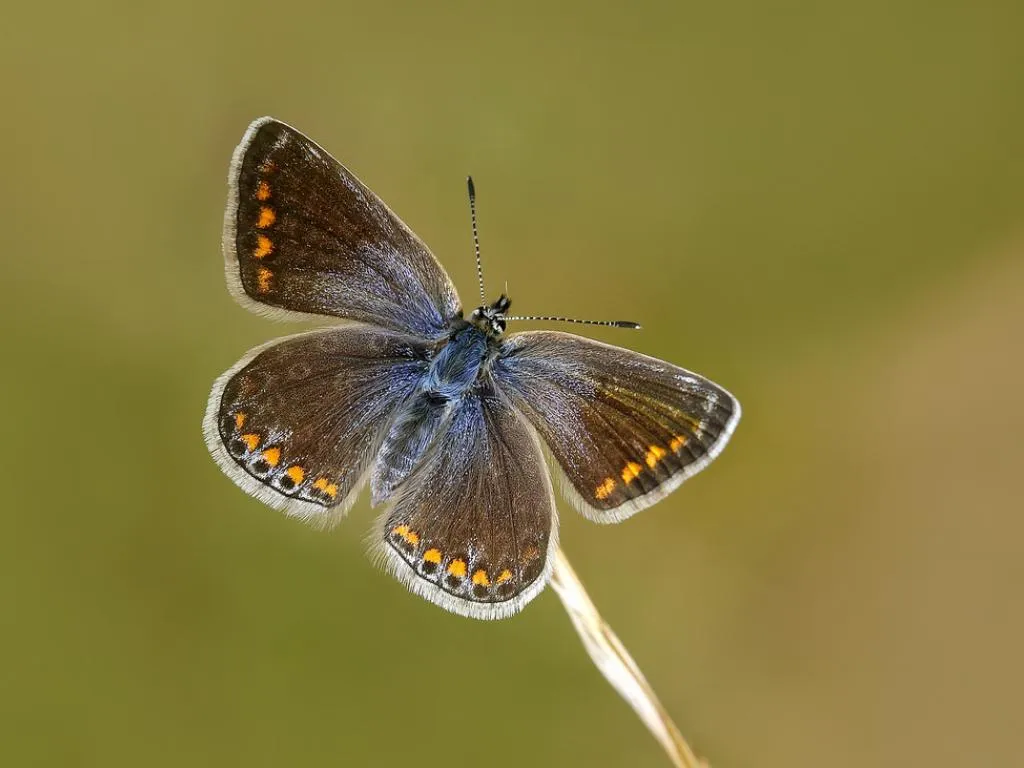
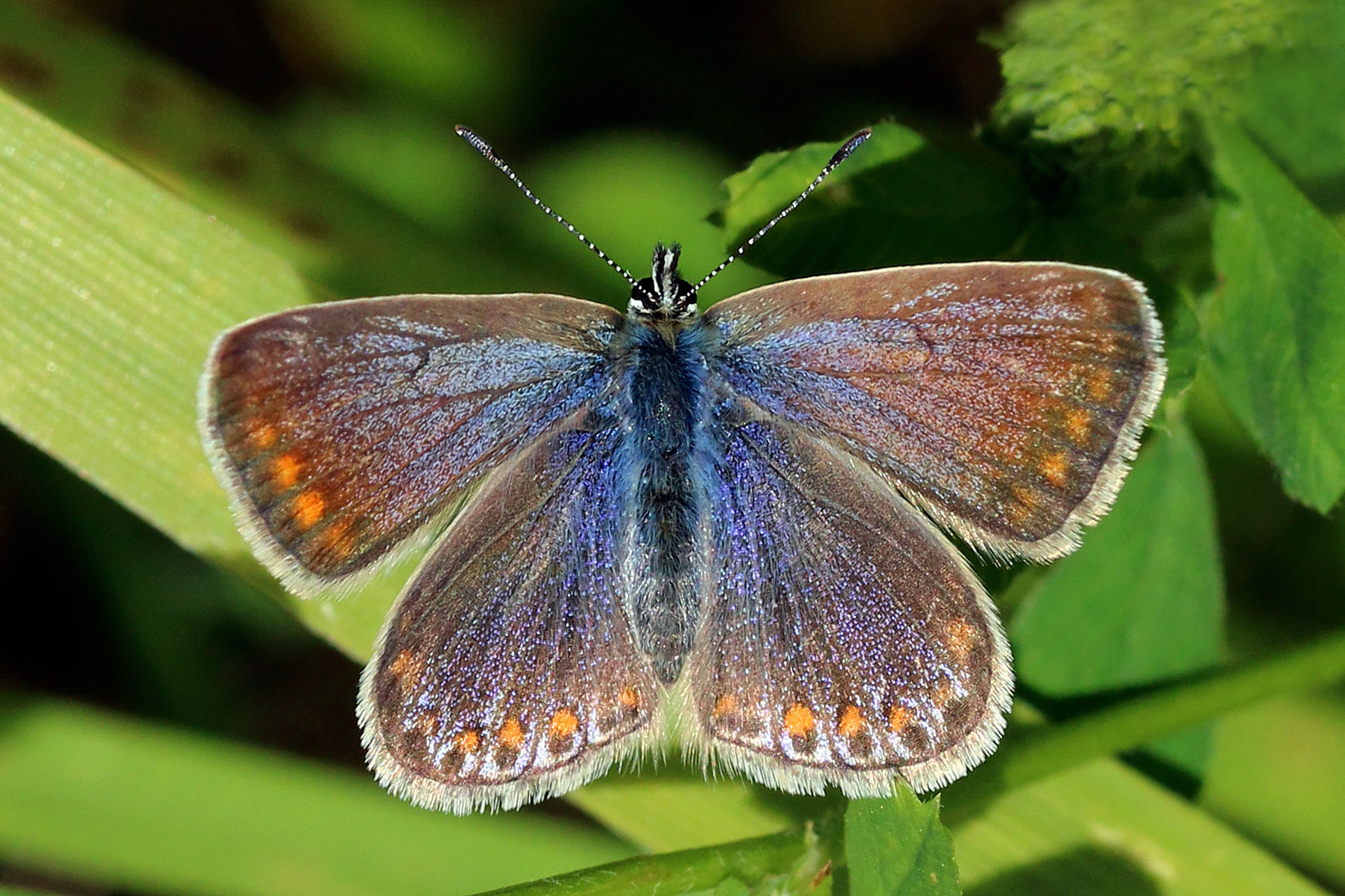
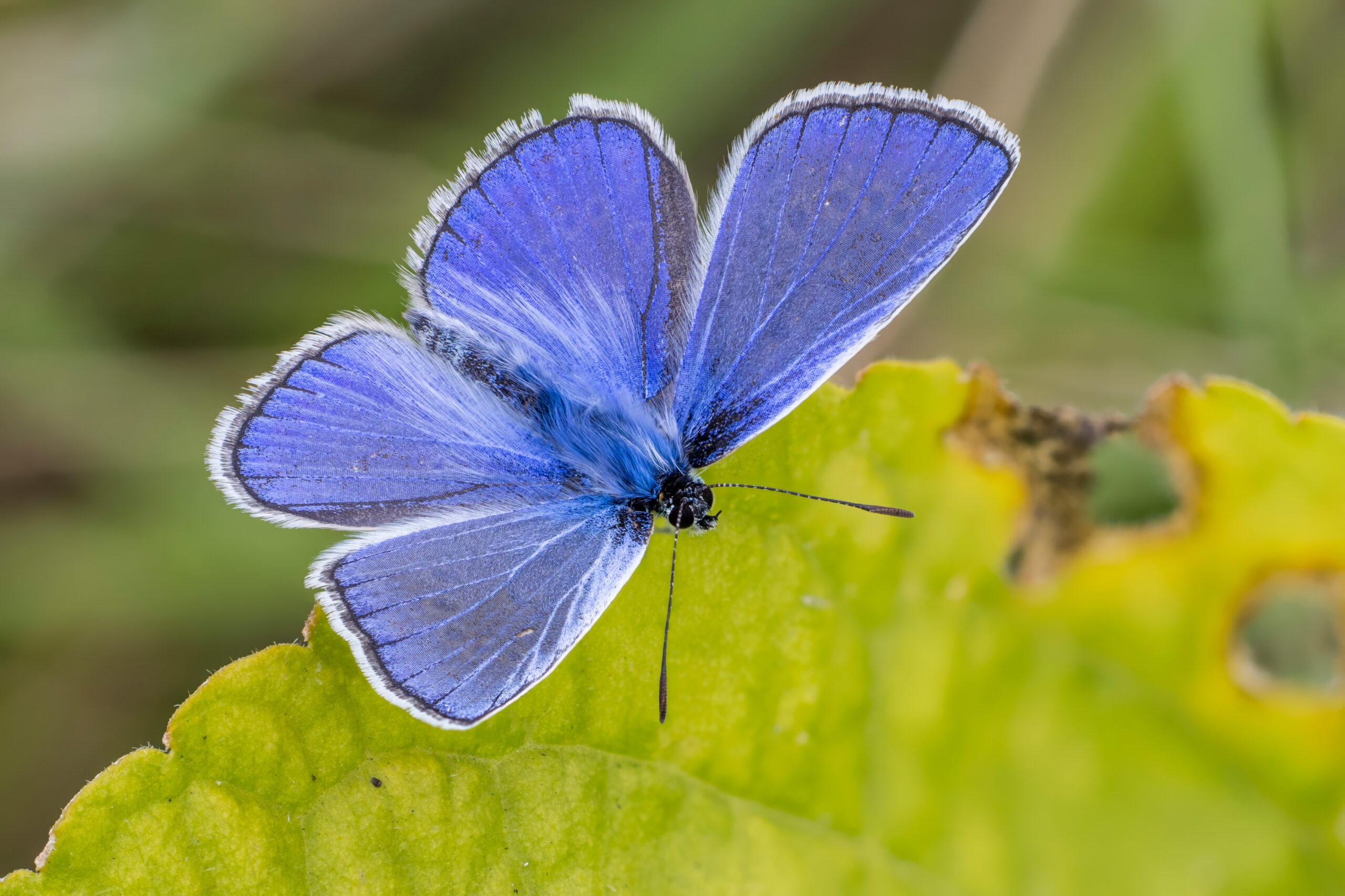
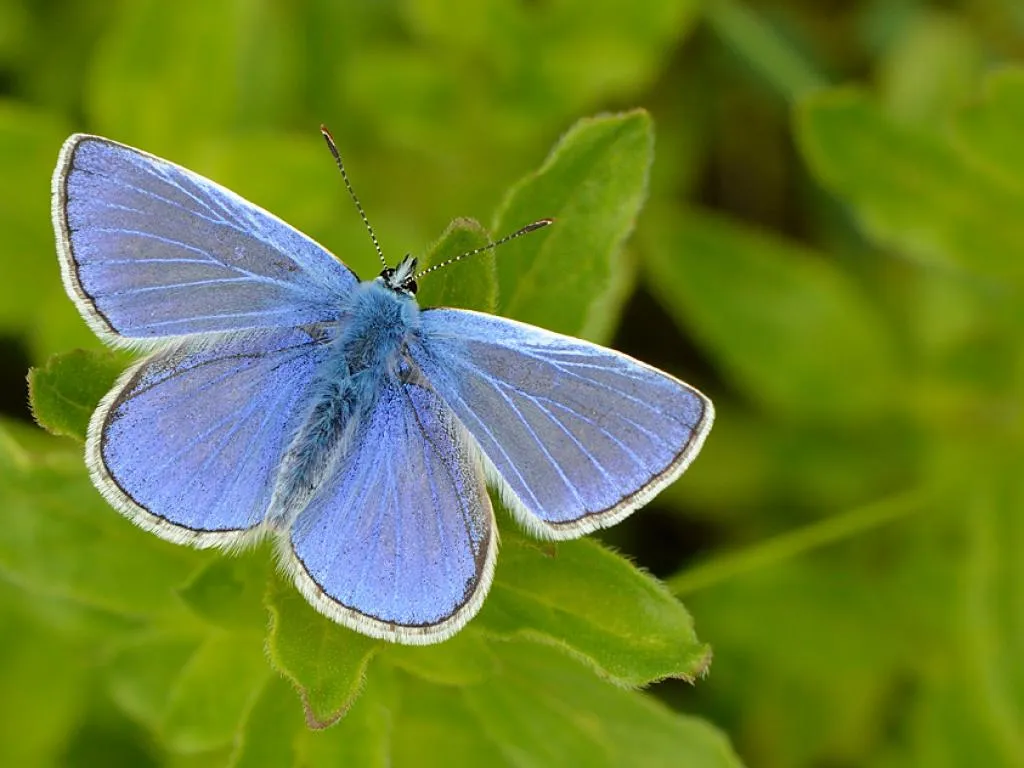
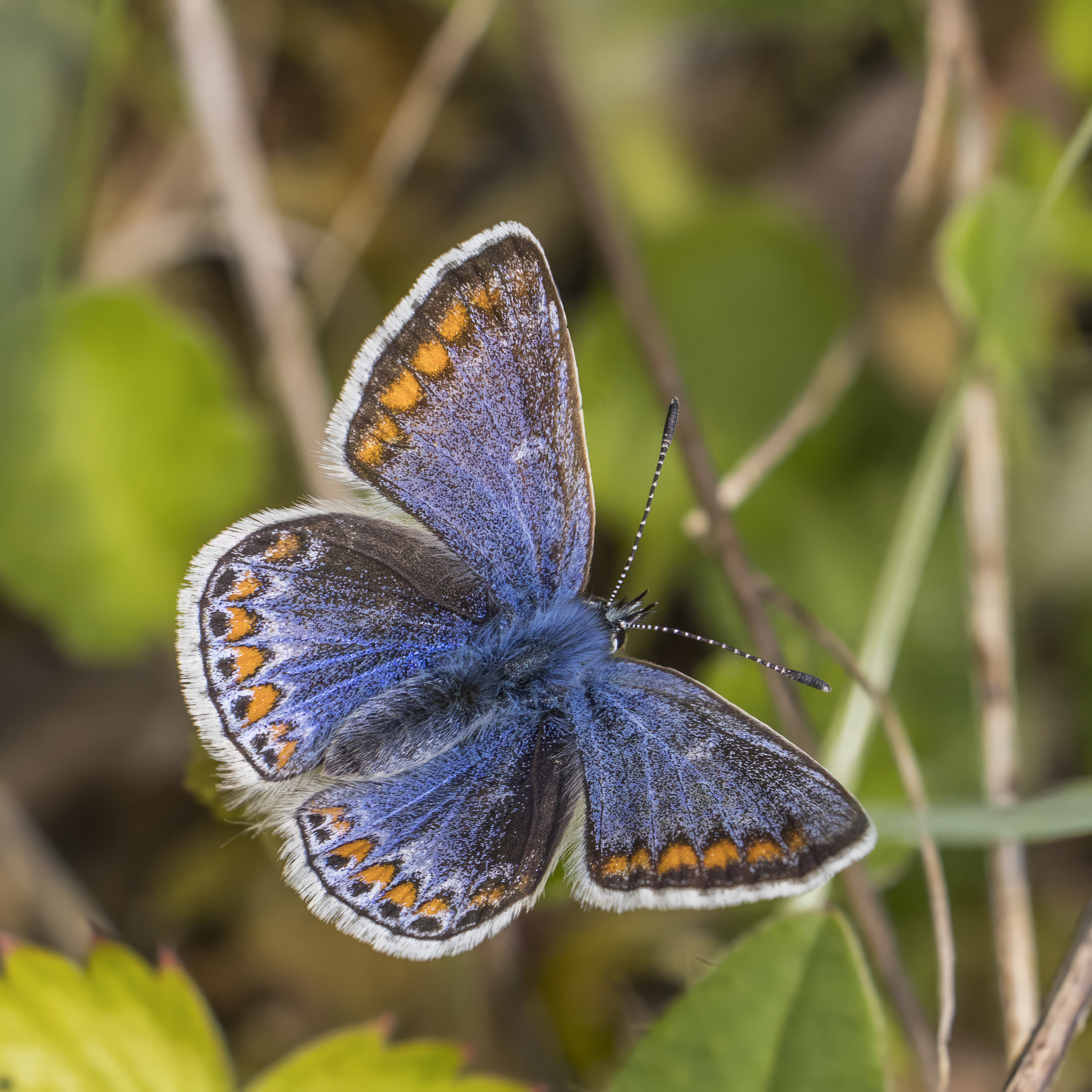
Male Common Blues are a lovely plain blue above, edged with a narrow dark border and a clear white fringe. Females are usually browner, often with orange markings near the edges and varying amounts of blue scaling. In some places the female can look surprisingly blue, while in others she appears mostly brown.
A very useful field mark is the wing fringe. Unlike the Adonis Blue, the dark veins of the Common Blue do not run through the white fringes at the wing edges. Another good clue is the underside: Common Blues show orange spots on the underside of the hindwings, which helps separate them from the Holly Blue, whose underside is much plainer and lacks those orange spots.
In the field, they often fly low over grassland and drop quickly into vegetation when they settle. Once you start watching for that low, close-to-the-ground flight, they become much easier to notice.
Common Blue Butterfly Habitat
One reason the Common Blue feels so familiar is its flexibility. It uses a wide range of sunny, sheltered grassy habitats, including meadows, chalk grassland, heathland, dunes, roadside verges, undercliffs, woodland rides, and rough urban edges. It is not especially tied to one single kind of landscape, but it does depend on suitable larval foodplants being present.
If you want to find one, the best places are often not the tidiest ones. Short, flower-rich, lightly managed grassland is usually far better than a space that is heavily cut, overly improved, or stripped of wild legumes. In that sense, the Common Blue is a good reminder that small wildlife often thrives in the overlooked corners of a landscape.
What Do Common Blue Caterpillars Eat?
The main foodplant of the Common Blue is Common Bird’s-foot Trefoil. Depending on local conditions, the caterpillars also use other legumes, including Greater Bird’s-foot Trefoil, Black Medick, clovers, restharrow, and related plants in the pea family.
That connection matters. When these low-growing wild plants are abundant, Common Blues can do well. When they disappear under intensive mowing, heavy fertiliser use, or habitat change, the butterfly often declines locally too.
Common Blue Butterfly Life Cycle
Females lay their eggs singly on or near the foodplant. The eggs hatch after about a week, and the tiny caterpillars begin feeding low down on the plant. As they grow, the larvae become greener, and later broods usually overwinter as half-grown caterpillars before completing development the following spring. Pupation happens near the ground.
Like many blue butterflies, the larvae can have a relationship with ants. The caterpillars produce sugary secretions, and ants may attend them and offer some protection in return. It is a small detail, but it adds another layer of fascination to a butterfly that many people first think of simply as “the little blue one in the grass.”
In southern Britain there are usually two broods, with adults often appearing in late spring and again in late summer. Farther north there is often just one brood. Across the UK, the overall flight season is commonly given as spring into autumn, roughly April or May through September or October depending on region and weather.
Is the Common Blue Butterfly Really Common?
In broad terms, yes. It remains one of the most widespread blue butterflies in Britain and Ireland, and Butterfly Conservation lists it as Least Concern on the GB Red List 2022, with low conservation priority in Britain. At the same time, there have been local declines, which shows that even a familiar species can lose ground when habitat quality falls.
That is part of what makes the Common Blue so interesting. It is still common enough to delight beginners, but it also tells a larger story about how much wildlife depends on flower-rich grassland, native foodplants, and the sort of semi-wild places that are easy to ignore.
Final Thoughts
The Common Blue butterfly is easy to admire because it feels both delicate and resilient. Once you know the basics, it becomes a very rewarding species to identify: bright blue males, more variable females, orange spots beneath the hindwings, and a clear preference for sunny grassy places where bird’s-foot trefoil and other legumes grow. It turns an ordinary walk into something slower and more attentive, which may be one reason so many people remember their first close look at one.
FAQ
What is the scientific name of the Common Blue butterfly?
The scientific name of the Common Blue butterfly is Polyommatus icarus.
How do you tell a Common Blue from a Holly Blue?
The easiest way is to look at the underside of the hindwings. Common Blues have orange spots there, while Holly Blues do not.
What do Common Blue caterpillars eat?
Their main foodplant is Common Bird’s-foot Trefoil, but they also use other legumes such as Black Medick, clovers, and restharrow.
When can you see a Common Blue butterfly?
In the UK, adults are generally on the wing from spring into autumn, often from April or May through September or October, depending on latitude and weather.
Where does the Common Blue butterfly live?
It lives in many sunny grassy habitats, including meadows, heathland, dunes, road verges, woodland clearings, rough grassland, parks, and some gardens.