Introduction
Butterflies in Southern California can appear almost anywhere there is warmth, sunlight, shelter, and the right plants. You may see a monarch drifting over milkweed, a gulf fritillary flashing orange around passionflower vine, a painted lady moving quickly through spring wildflowers, or a small skipper darting low over a lawn.
The region’s butterfly life is especially rich because Southern California includes many overlapping habitats: coastal sage scrub, chaparral, urban gardens, foothill canyons, desert washes, mountain meadows, and tree-lined neighborhoods. For beginners, the best way to start is not by memorizing every species. It is to learn a few common shapes, colors, flight styles, and host-plant clues.
This guide introduces some of the most noticeable butterflies in Southern California, how to identify them, where to look for them, and why host plants matter as much as flowers.
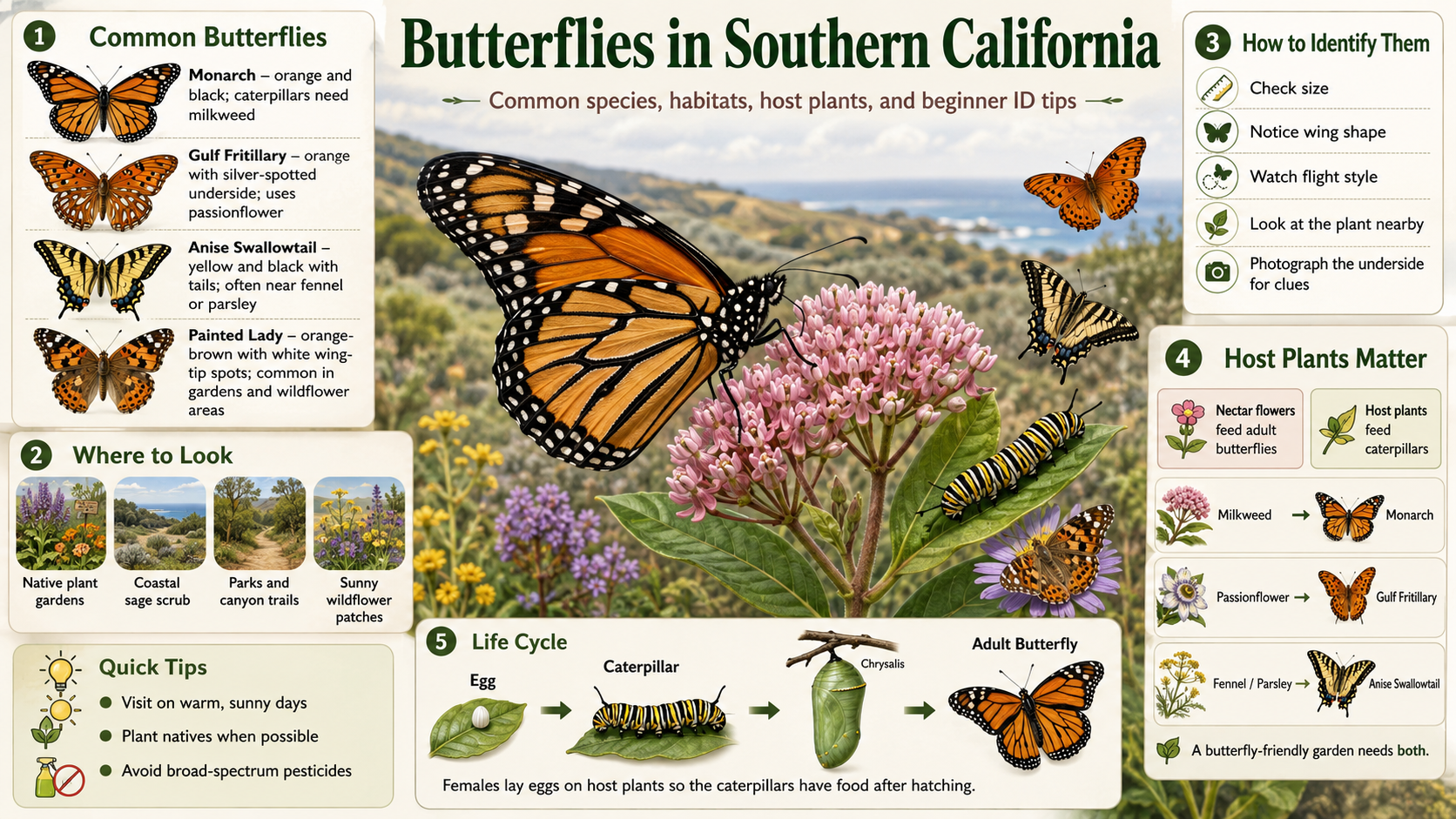
Quick Answer: What Butterflies Are Common in Southern California?
Some of the most familiar butterflies in Southern California include monarchs, painted ladies, gulf fritillaries, anise swallowtails, western tiger swallowtails, mourning cloaks, cabbage whites, common buckeyes, cloudless sulphurs, marine blues, fiery skippers, and several hairstreaks and blues.
In gardens, the butterflies you notice most often are usually the larger, brighter, or more active species: monarchs, gulf fritillaries, painted ladies, swallowtails, sulphurs, and skippers. In chaparral, foothills, and native plant areas, you may also find more specialized species that depend on native host plants.
Why Southern California Is Good Butterfly Country
Southern California has a long warm season, many flowering plants, and a wide range of microhabitats. A small garden in Los Angeles, a canyon in San Diego, a desert edge in Riverside County, and an oak woodland in the foothills may all attract different butterflies.
Butterflies need more than nectar. Adult butterflies drink nectar from flowers, but caterpillars need specific host plants. A host plant is the plant a female butterfly uses for laying eggs and the plant the caterpillars can eat after hatching.
This is one of the most important ideas in butterfly watching. A yard full of flowers may attract adult butterflies for a short visit. A yard with the right host plants can support the full butterfly life cycle.
Common Butterflies in Southern California
Monarch Butterfly
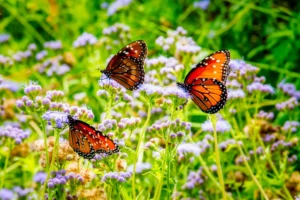
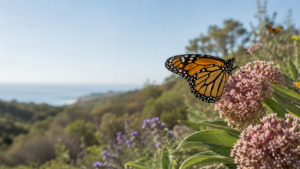
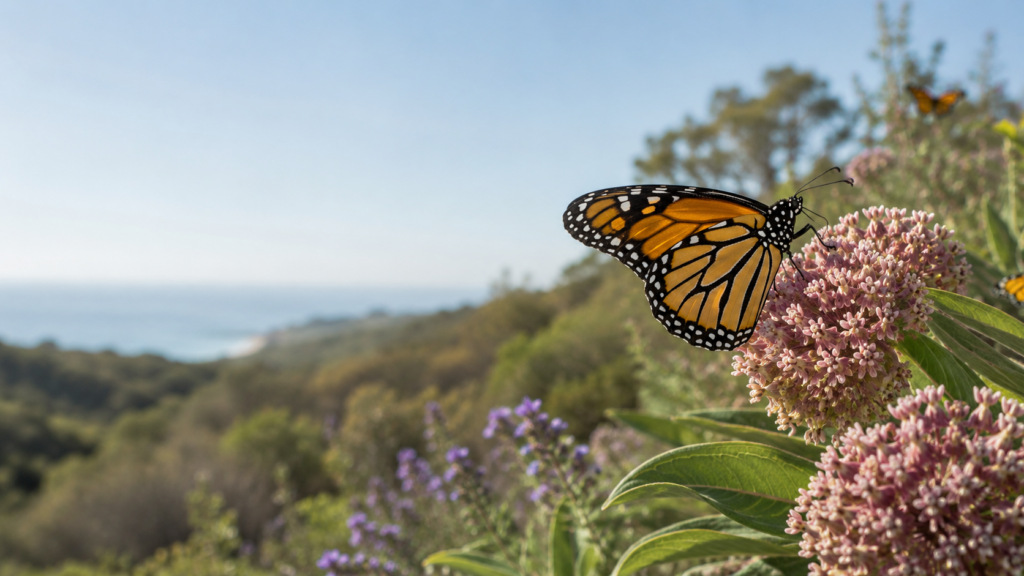
The monarch is one of the best-known butterflies in Southern California. It is large, orange, and black, with bold black veins and white spots along the wing edges. When it glides, it often looks slower and more floating than many smaller butterflies.
Monarch caterpillars feed on milkweed. In California gardens, native milkweeds such as narrowleaf milkweed and other locally appropriate species are usually preferred over tropical milkweed. In coastal areas near overwintering sites, gardeners should be especially careful and follow local guidance, because planting milkweed in the wrong place can affect monarch behavior and disease risk.
Look for monarchs around milkweed, native nectar plants, and coastal overwintering areas during the appropriate season. In inland gardens, they may appear wherever milkweed and nectar plants are available.
How to tell it apart: Monarchs have thick black wing veins and a strong orange-and-black pattern. Gulf fritillaries are also orange, but they are slimmer, more spotted, and have bright silvery markings on the underside.
Painted Lady
The painted lady is a fast, widespread butterfly with orange, brown, black, and white markings. It often appears during migration events, especially after rainy seasons that produce abundant wildflowers.
Painted ladies can use many host plants, which helps explain why they are so widespread. In Southern California, they may be seen in open fields, gardens, roadsides, desert blooms, and coastal areas.
What to look for: Painted ladies have a mottled appearance rather than the clean black-veined pattern of a monarch. The wing tips show black with white spots, and the underside can look softly patterned in browns and grays.
Gulf Fritillary
The gulf fritillary is one of the easiest orange butterflies to recognize in Southern California gardens. It has long, narrow orange wings with black spots above, and the underside of the hindwing is marked with bright silvery spots.
This butterfly is strongly associated with passionflower vines. In many neighborhoods, if someone grows passionflower, gulf fritillaries may appear nearby. The caterpillars are orange with dark, spiny-looking projections, but the spines are not the same as a bee or wasp sting.
How to tell it apart from a monarch: A gulf fritillary is usually narrower-winged, more spotted, and more restless in flight. A monarch looks broader and more strongly veined.
Anise Swallowtail
The anise swallowtail is a striking yellow-and-black butterfly with tails on the hindwings. It is often seen around open slopes, gardens, roadsides, and places where carrot-family host plants grow.
Its caterpillars can use native carrot-family plants, and in gardens they are often associated with fennel, parsley, dill, and related herbs. The adult butterfly is bright and elegant, with a strong yellow background and black bands.
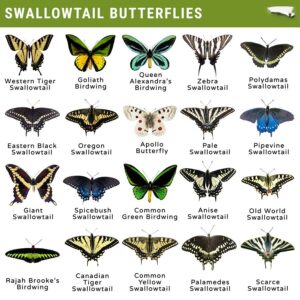
Identification tip: Look for the swallowtail shape: large wings, black-and-yellow pattern, and small tail-like extensions on the hindwings. It can be confused with western tiger swallowtail, but anise swallowtails usually have a more compact, darker pattern.
Western Tiger Swallowtail
The western tiger swallowtail is one of the most impressive butterflies in the region. It is large, yellow, and black, with tiger-like vertical stripes and long tails.
This butterfly is often associated with trees and riparian corridors. Its host plants include trees such as sycamore, alder, cottonwood, and related species. In Southern California, it may be seen along streams, canyon bottoms, parks, and older neighborhoods with mature trees.
How to tell it apart: Western tiger swallowtails are usually larger and more “tiger-striped” than anise swallowtails. They often fly higher, especially around trees.
Mourning Cloak
The mourning cloak is a dark, velvety butterfly with a pale yellow border around the wings and small blue spots just inside the edge. It is one of the more distinctive butterflies for beginners because its color pattern is unlike most orange or yellow garden butterflies.
Mourning cloaks are often associated with trees such as willows and related host plants. Adults may visit sap, rotting fruit, and nectar. They can appear early in the season and may be seen along wooded edges, streams, parks, and shaded canyons.
What to look for: Dark maroon-brown wings, a creamy yellow edge, and blue spots. It often glides and then lands with wings open in sunlight.
Common Buckeye
The common buckeye is a medium-sized butterfly with bold eyespots on the wings. These eyespots make it easy to identify once you learn the pattern.
It is often seen in open sunny areas, trails, fields, disturbed ground, and gardens. Its host plants vary, including plantains, owl’s clover, penstemons, fogfruit, and related plants depending on local conditions.
Beginner clue: If the butterfly has several large “eye” markings on brownish wings and sits on open ground or low vegetation, common buckeye is a strong possibility.
Cabbage White
The cabbage white is a small white or pale cream butterfly often seen fluttering through vegetable gardens, lawns, and disturbed areas. It is not as dramatic as a swallowtail or monarch, but it is one of the butterflies beginners notice most often.
Its caterpillars feed on plants in the mustard family, including cabbage, kale, broccoli, and related garden crops. For that reason, gardeners may know it better as a pest than as a butterfly to attract.
Identification tip: Look for a small white butterfly with black tips or spots. Its flight is light, fluttery, and often low over garden beds.
Cloudless Sulphur and Other Yellow Butterflies
Yellow butterflies can be tricky because several species may look similar at first glance. Cloudless sulphurs are bright yellow and often fly strongly through gardens and open spaces. Other sulphurs and whites may also occur in the region.
For beginners, the best starting point is to note size, shade of yellow, black markings, and behavior. Sulphurs usually have a more direct flight than cabbage whites and can look more vivid in sunlight.
Marine Blue and Other Small Blues
Small blue butterflies are easy to overlook until you watch low-growing flowers or shrubs closely. Marine blues and other blues may appear as tiny flashes of blue, lavender, gray, or brown.
Many blues are best identified by the underside pattern, which can include fine lines, dots, or small orange marks. They often stay close to host plants, low vegetation, or flowering shrubs.
Beginner advice: Photograph small blues from the side when they land with wings closed. The underside pattern is often more useful than the upperwing color.
Fiery Skipper and Other Skippers
Skippers are butterflies, but they often look slightly different from the larger, broad-winged species people imagine. They are usually small, fast, compact, and muscular-looking, with quick darting flight.
The fiery skipper is orange to golden-brown and common in many warm garden settings. Skippers often visit small flowers and may rest with wings held partly open in a triangular or angled position.
How to recognize skippers: Look for a stocky body, large eyes, short rapid flights, and a “jet-like” resting posture. They often seem more energetic and less floaty than monarchs or swallowtails.
Sara Orangetip
The Sara orangetip is a spring butterfly associated with foothills, chaparral edges, canyons, and open woodland habitats. Males show bright orange at the tips of the forewings, while the underside may have greenish marbling.
Its caterpillars feed on plants in the mustard family, including native mustards and related plants. This butterfly is a good example of why native spring wildflowers matter for butterfly life cycles.
What to look for: A white butterfly with orange wing tips, especially in spring. When it lands with wings closed, the underside may look delicately marbled.
Quino Checkerspot
The Quino checkerspot is a special Southern California butterfly, but it is not a common backyard butterfly. It is federally endangered and associated with specific habitats and host plants such as dwarf plantain and other native plants.
Beginners should know about it because it shows how closely some butterflies are tied to local habitat. While monarchs and painted ladies can travel widely, some butterflies depend on very specific plant communities and can decline when those habitats disappear.
Important note: If you think you have seen a rare or protected butterfly, observe without handling it. Take photos from a respectful distance and use a reputable identification platform or local naturalist group for confirmation.
How to Identify Butterflies in Southern California
Start With Size
Butterflies can be grouped loosely by size. Monarchs and swallowtails are large. Painted ladies, gulf fritillaries, mourning cloaks, and buckeyes are medium-sized. Blues, hairstreaks, and skippers are usually small.
Size alone does not identify a species, but it narrows the possibilities quickly.
Notice Wing Shape
Wing shape is one of the most useful clues.
Swallowtails have tails on the hindwings. Skippers look compact and triangular. Whites and sulphurs often have rounded wings. Fritillaries tend to look orange and spotted. Blues are small and delicate.
Watch the Flight Style
A monarch often glides. A painted lady flies quickly and directly. A skipper darts. A cabbage white flutters. A swallowtail may sail gracefully, especially near trees or open slopes.
Flight style can be surprisingly helpful once you spend time watching butterflies in the field.
Look at the Plant
The plant nearby may be as important as the butterfly itself. A monarch near milkweed, a gulf fritillary around passionflower, a swallowtail near fennel or sycamore, or a cabbage white over broccoli gives you a strong identification clue.
Photograph the Underside
Many butterflies look different when their wings are closed. Blues, hairstreaks, commas, and ladies can be much easier to identify from the underside pattern. A quick side-view photo can be more useful than a blurry top-view shot.
Note the Habitat
A butterfly in a coastal garden may not be the same as one on a desert trail. Southern California includes coastal sage scrub, chaparral, desert, oak woodland, riparian corridors, suburban gardens, and mountain habitats. Always include location and habitat when trying to identify a butterfly.
Habitat, Host Plants, Diet, and Life Cycle
Adult Diet: Nectar and More
Most adult butterflies drink nectar from flowers. They use a long, straw-like mouthpart called a proboscis to sip liquid food.
Some species also visit tree sap, damp soil, rotting fruit, or other mineral sources. This behavior may look unusual, but it is normal for many butterflies.
Caterpillar Diet: Host Plants
Caterpillars do not eat just any leaf. Many butterfly caterpillars are specialized and can only survive on certain host plants or plant families.
Monarch caterpillars need milkweed. Gulf fritillary caterpillars use passionflower vines. Anise swallowtail caterpillars use carrot-family plants. Western tiger swallowtails use certain trees, including sycamore and related riparian trees. Cabbage white caterpillars feed on mustard-family plants.
This is why host plants are essential in butterfly gardening. Nectar feeds adults, but host plants feed the next generation.
Life Cycle
Butterflies develop through four stages:
- Egg
- Caterpillar
- Chrysalis
- Adult butterfly
The adult female lays eggs on or near a host plant. The caterpillar hatches and feeds on that plant. After growing through several stages, it forms a chrysalis. Inside the chrysalis, the body changes into the adult butterfly.
In Southern California’s mild climate, some butterflies may be active for much of the year in warm areas, while others are strongly seasonal and appear mainly in spring, summer, or after rainfall.
Best Places to See Butterflies in Southern California
Native Plant Gardens
Native plant gardens are excellent places to learn butterflies because they often include both nectar plants and host plants. Watch flowering buckwheats, sages, milkweeds where appropriate, verbena, yarrow, goldenrod, and other locally native blooms.
Canyons and Stream Corridors
Riparian areas can attract swallowtails, mourning cloaks, admirals, and other species that use trees or moist habitat edges. Look along trails with sycamores, willows, cottonwoods, and seasonal flowers.
Coastal Sage Scrub and Chaparral
Chaparral and coastal sage scrub can support many native butterflies, especially where wildflowers bloom after winter rains. Spring can be especially productive.
Urban and Suburban Gardens
Even small gardens can attract butterflies if they provide sun, shelter, nectar, and the right host plants. Gulf fritillaries, skippers, cabbage whites, painted ladies, monarchs, sulphurs, and swallowtails may all appear in neighborhood settings.
Desert Blooms
After good rainfall, desert areas can produce spectacular wildflower blooms and butterfly activity. Painted ladies are especially associated with large movement events after favorable conditions.
Similar Butterflies and Look-Alikes
Monarch vs. Gulf Fritillary
Both are orange, but they look very different once you slow down.
A monarch has bold black veins and a broad, stained-glass pattern. A gulf fritillary is more spotted, narrower-winged, and has silver markings underneath.
Painted Lady vs. West Coast Lady
These two can be difficult for beginners. Painted ladies are widespread and strongly migratory. West Coast ladies are also found in California and may use mallows as host plants. Focus on wing pattern, underside markings, and location, and use photographs for confirmation.
Anise Swallowtail vs. Western Tiger Swallowtail
Both are yellow and black swallowtails. Western tiger swallowtails are usually larger, with more obvious tiger-striping and a stronger association with trees and riparian areas. Anise swallowtails are often seen around open slopes, fennel, and other carrot-family plants.
Cabbage White vs. Sara Orangetip
A cabbage white is plain white to cream with dark spots or tips. Sara orangetip males have bright orange on the forewing tips and are most noticeable in spring. Females and worn individuals can be more subtle, so habitat and season help.
Small Blues and Hairstreaks
Tiny butterflies can be challenging. Blues often show blue or gray upperwings and patterned undersides. Hairstreaks may have small tails and orange or metallic markings near the hindwing edge. A clear side photo is often the best way to start.
Butterfly Gardening Tips for Southern California
A good butterfly garden does not need to be large. It needs to be thoughtful.
Plant nectar flowers for adult butterflies, and include host plants for caterpillars when appropriate. Choose locally suitable native plants whenever possible. Avoid pesticides, especially broad-spectrum insecticides, because caterpillars are insects too. Leave some natural texture in the garden, including leaf litter, stems, and sheltered areas.
For monarchs, be careful with milkweed choices. In many inland areas, native milkweed can be valuable. Near coastal overwintering areas, the best guidance may be to focus on winter and early spring nectar plants rather than planting milkweed close to the coast. Local native plant societies, extension programs, and conservation groups can help gardeners make the right choice for their exact area.
FAQ
What is the most common butterfly in Southern California?
There is no single answer for every neighborhood or habitat. Cabbage whites, painted ladies, gulf fritillaries, skippers, monarchs, and sulphurs are among the butterflies many people notice frequently in gardens and urban areas.
When is the best time to see butterflies in Southern California?
Warm, sunny days are usually best. Spring can be excellent after winter rain because wildflowers support nectar and host plants. Gardens may also attract butterflies through summer and fall if flowers are blooming.
Are monarch butterflies common in Southern California?
Monarchs can be seen in Southern California, but their numbers vary by season, location, and broader population trends. They are most closely associated with milkweed for caterpillars and nectar plants for adults.
What orange butterflies look like monarchs in Southern California?
Gulf fritillaries and painted ladies are common orange butterflies that beginners may confuse with monarchs. Gulf fritillaries are more spotted and have silver markings underneath. Painted ladies are smaller and more mottled.
What plants attract butterflies in Southern California?
Adult butterflies visit many nectar flowers, but host plants are more specific. Milkweed supports monarch caterpillars, passionflower supports gulf fritillaries, carrot-family plants support anise swallowtails, and certain trees support western tiger swallowtails. The best choices depend on your location.
Are all caterpillars in my garden butterfly caterpillars?
No. Many caterpillars become moths, and moths are also important pollinators and wildlife food. If you find caterpillars, try to identify the host plant and take photos before removing them.
Conclusion
Butterflies in Southern California are easiest to understand when you connect three clues: appearance, habitat, and plants. A large orange butterfly over milkweed may be a monarch. A bright orange butterfly circling passionflower is likely a gulf fritillary. A yellow-and-black butterfly near trees may be a western tiger swallowtail, while a quick orange skipper low in the garden may belong to a very different butterfly family.
For beginners, the goal is not to identify every species immediately. Start with the common butterflies, learn their shapes and host plants, and pay attention to where you see them. Over time, Southern California’s gardens, canyons, chaparral trails, and wildflower fields become much easier to read.