
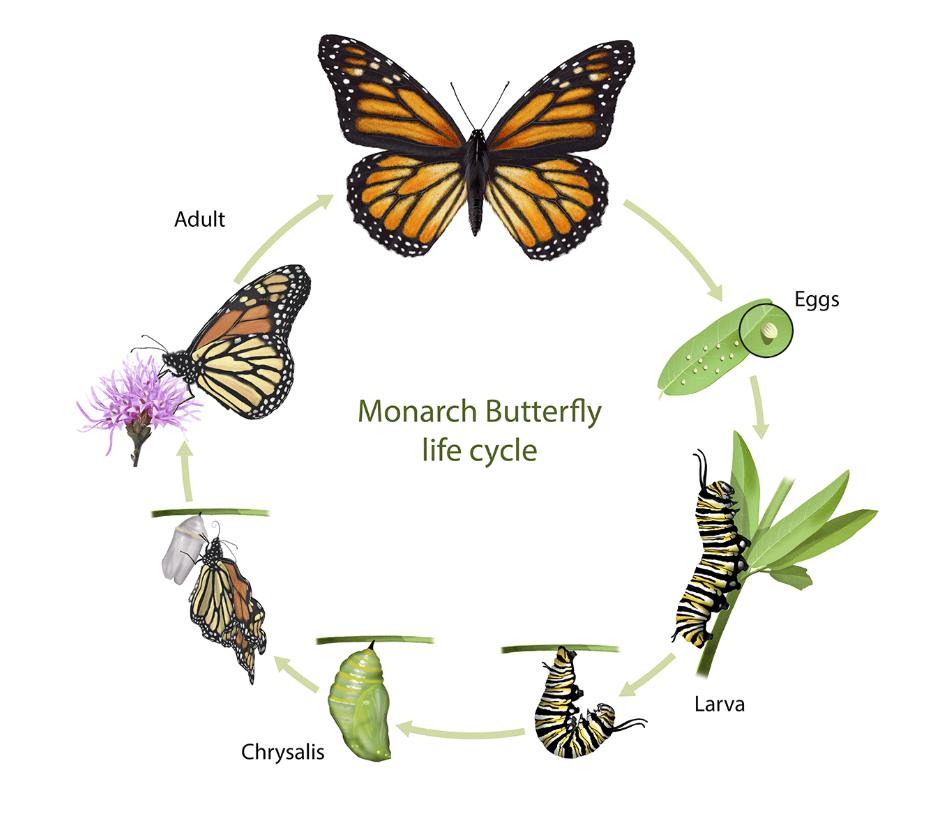
Butterfly metamorphosis is one of those natural processes that never really loses its power. Even if you already know the basic story—egg, caterpillar, chrysalis, butterfly—it still feels almost unreal when you stop and look closely. A tiny egg becomes a leaf-eating caterpillar, then disappears into a quiet shell, only to emerge as something completely different.
That transformation is part of what makes butterflies so fascinating. They are beautiful, of course, but their appeal goes deeper than color and pattern. Their life cycle carries a sense of renewal, fragility, and change that people have connected with for centuries. At the same time, the science behind butterfly metamorphosis is just as compelling. It is not a simple costume change. It is a complete developmental process that reshapes the insect from the inside out.
In this guide, we will look at the four stages of butterfly metamorphosis, what actually happens inside the chrysalis, and why this process continues to capture so much human attention.
Life Cycle of a Butterfly
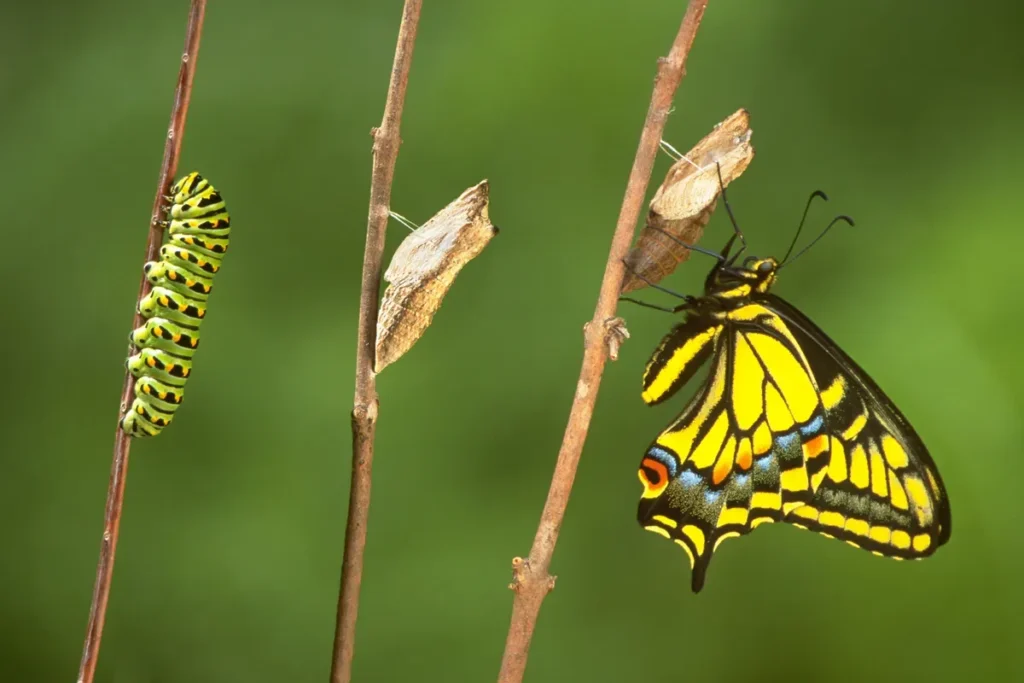
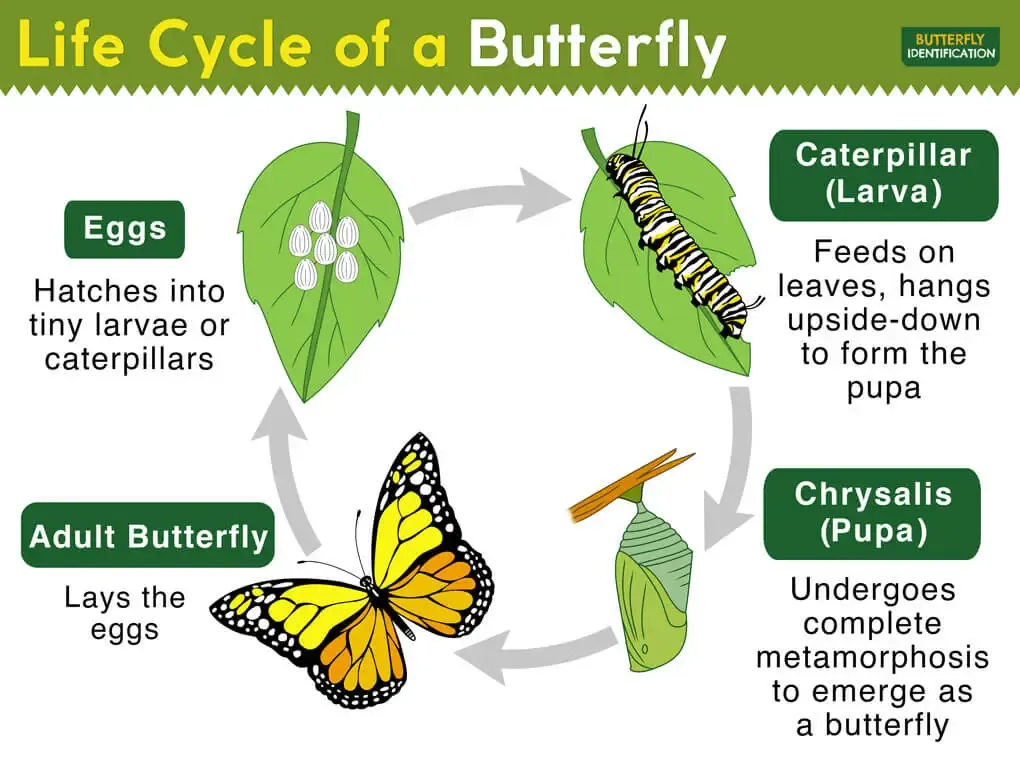
Butterflies have a “complete” life cycle which includes four stages. Each stage looks completely different and serves a different purpose in the development of the insect. This is called metamorphosis.
Stage 1: The Egg After butterflies mate, the female lays eggs on or under the leaves or stems of the host plant (intended food) for the caterpillars which will hatch from the eggs. Some butterflies lay their eggs singly, others lay them in clusters. Depending on the species, adults can lay eggs several times each season.
The egg is a tiny round or oval shape. Sometimes they have ribs or other markings. Generally, only 2 out of 100 butterfly eggs will survive to adulthood. Spiders, wasps, and parasitic flies are their primary predators, and some eggs will also be eaten by birds and reptiles.
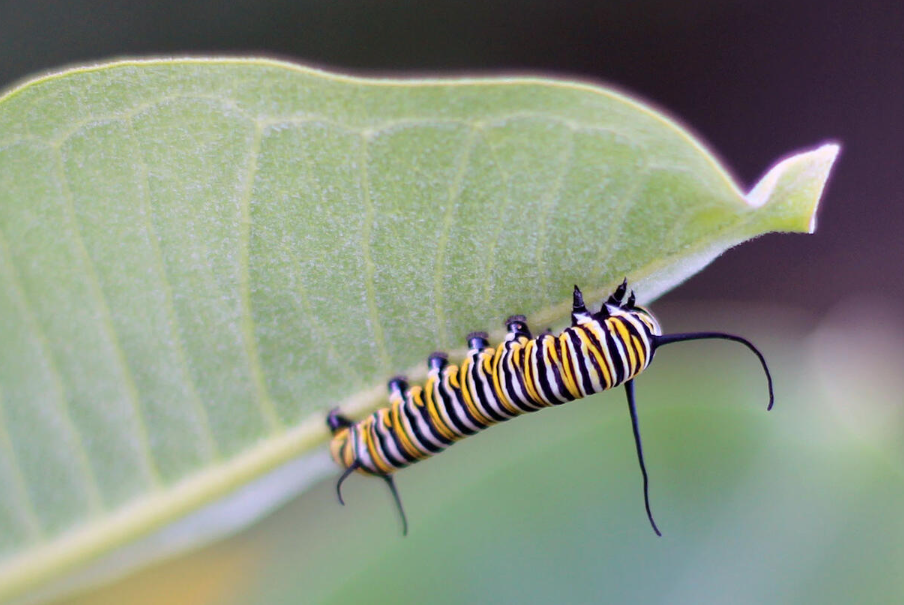
Stage 2: Caterpillar (larva) After the caterpillar (larva) hatches from the egg, it will spend several weeks eating and growing. Look for them on or near the well-eaten leaves of the host plant. Depending on the species, a caterpillar may be smooth, hairy, or spiny, be a solid color, or have stripes or a colorful pattern on its body. As it grows, the caterpillar will molt or shed its exoskeleton numerous times.
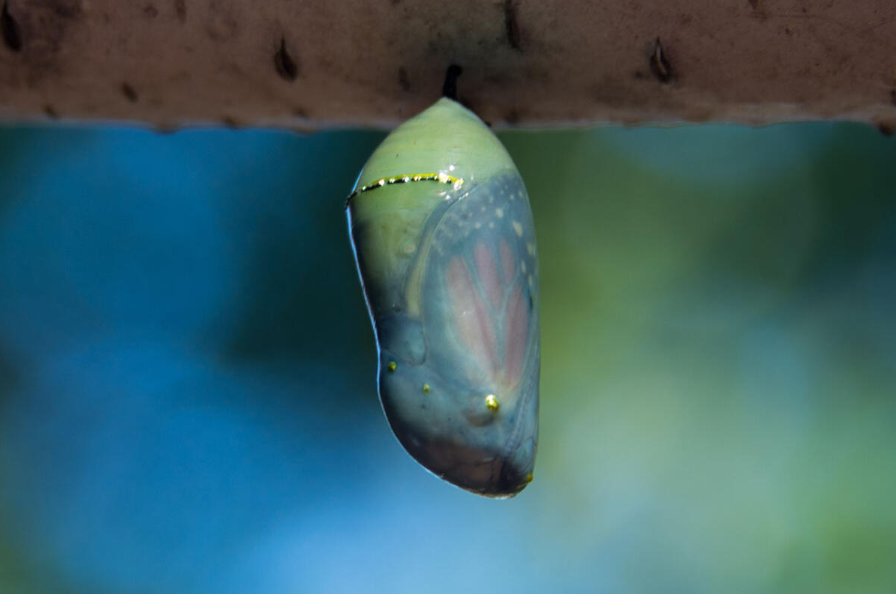
Stage 3: Chrysalis (pupa) After a few weeks of eating, molting and growing, the caterpillar will select a protected area to make its chrysalis (similar to a cocoon) and will spin a thread to attach itself to a leaf or branch. The change into a chrysalis takes only a few minutes.
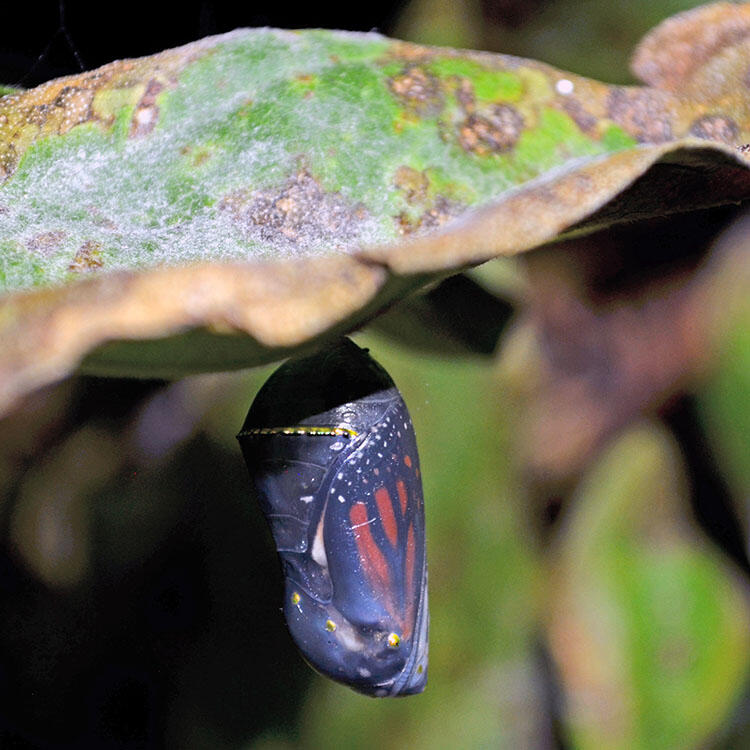
The chrysalis (or pupa) is the final stage of metamorphosis whereby the caterpillar’s tissues are dissolved and reformed into the adult insect’s organs, limbs, and wings. The chrysalis of most species is brown or green, which provides excellent camouflage. Some butterfly species spend all winter in their chrysalides before they emerge in the spring. Other pupate only a few weeks during warmer months before emerging to begin the cycle of metamorphosis again. View video of Monarch going from “J-mode to Chrysalis.
Stage 4: Butterfly The adult (or imago) is a butterfly. It is the reproductive and mobile stage for the species. The adults will go through courtship, mating, and egg-laying. The adult butterfly migrates or colonizes new habitats. Many butterfly species migrate northward during the Spring and early Summer, feeding on freshly sprouted larval plants.
Butterfly Metamorphosis and Why It Feels So Remarkable
Butterflies often symbolize hope, rebirth, and transformation, and it is easy to see why. Their life cycle seems to tell a story: a beginning, a period of growth, a hidden phase of change, and then a reappearance in a new form. That symbolism has appeared in different cultures for generations.
But butterfly metamorphosis is not only meaningful in a poetic sense. It is also a biological marvel. Butterflies undergo what scientists call complete metamorphosis, a form of development in which the juvenile stage looks and lives very differently from the adult stage. A caterpillar is built for eating and growing. A butterfly is built for dispersal, reproduction, and pollination. They are the same animal at different life stages, yet their bodies serve very different purposes.
That contrast is what makes the process so memorable. It feels symbolic, but it is also highly practical from an evolutionary perspective.
The Four Stages of Butterfly Metamorphosis
1. Egg
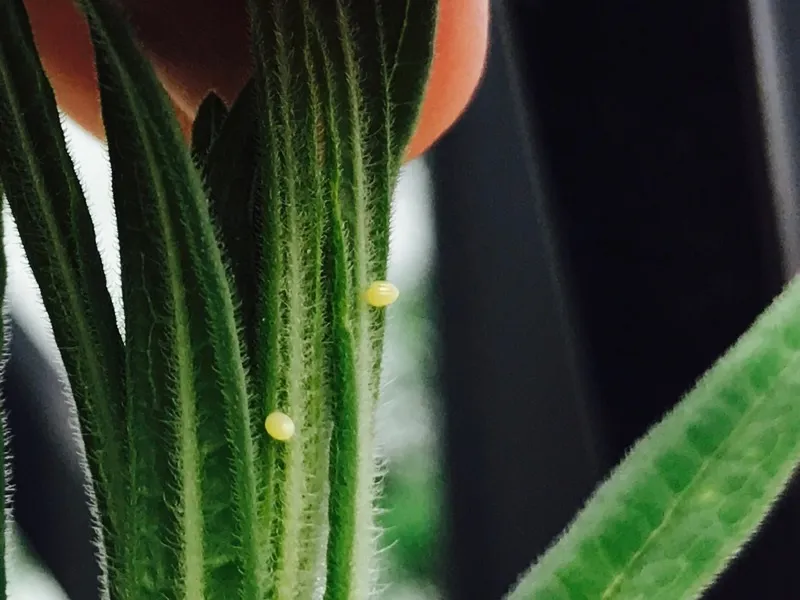
Every butterfly begins as an egg. Butterfly eggs come in a surprising variety of shapes and textures. Some are nearly round, while others are more cylindrical or oval. Many have delicate ridges, ribs, or sculpted patterns on the outside.
The female butterfly usually lays her eggs on or near a specific host plant. This matters because the caterpillar that hatches will need the right food immediately. In many species, the mother chooses the plant very carefully, because her offspring can only survive on certain leaves. Monarch butterflies, for example, lay eggs on milkweed because monarch caterpillars depend on it.
Inside the egg, the embryo develops using nutrients stored in the yolk. Some butterflies lay a single egg at a time, while others lay dozens or even more than a hundred.
2. Larva (Caterpillar)
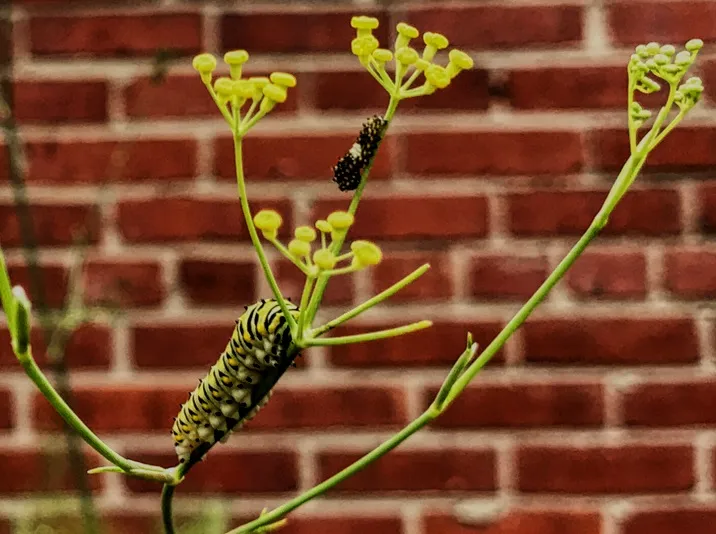
Once the egg hatches, the butterfly enters its larval stage. This is the caterpillar phase, and it is all about eating and growing.
Caterpillars begin feeding almost immediately. In some cases, the first thing they eat is their own eggshell. From there, they move on to the host plant and eat at an astonishing pace. Their job during this stage is simple: store energy and increase in size.
Because a caterpillar grows so quickly, it cannot keep the same skin forever. It sheds its outer layer several times in a process called molting. Each stage between molts is known as an instar. In some species, the appearance of the caterpillar changes noticeably from one instar to the next. A young caterpillar may look like bird droppings for camouflage, while an older one may display bold warning colors.
This stage is not just about appetite. Caterpillars also need protection. Depending on the species, they may rely on camouflage, spines, irritating hairs, or toxins taken in from the plants they eat. These defenses help them survive long enough to reach the next stage.
3. Pupa (Chrysalis)
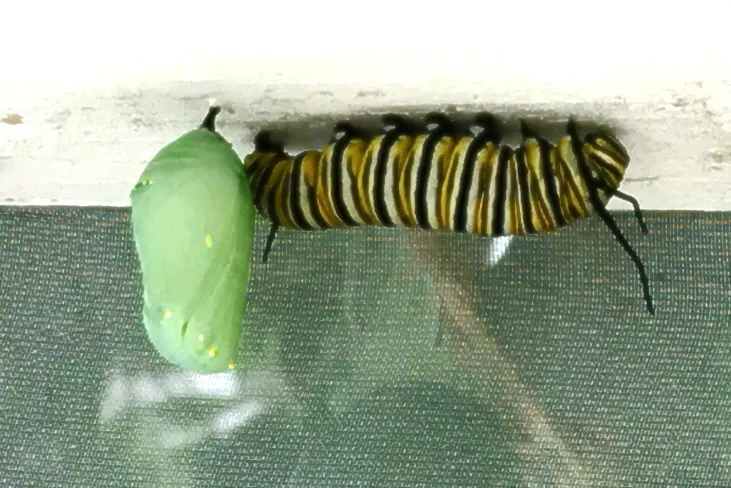
After the caterpillar has grown enough, its hormones shift and its behavior changes. It stops feeding and begins searching for a safe place to pupate. This is often a sheltered or camouflaged location away from the most exposed feeding areas.
The caterpillar attaches itself with silk and settles into position. Then it molts one final time, revealing the chrysalis underneath. This is the pupal stage of butterfly metamorphosis.
From the outside, the chrysalis may look still and uneventful. In reality, this is where the most dramatic transformation occurs. The pupa does not eat. Instead, it relies on stored nutrients gathered during the caterpillar stage. Protected by the chrysalis, the insect reorganizes its body and develops the structures needed for adult life.
4. Adult Butterfly
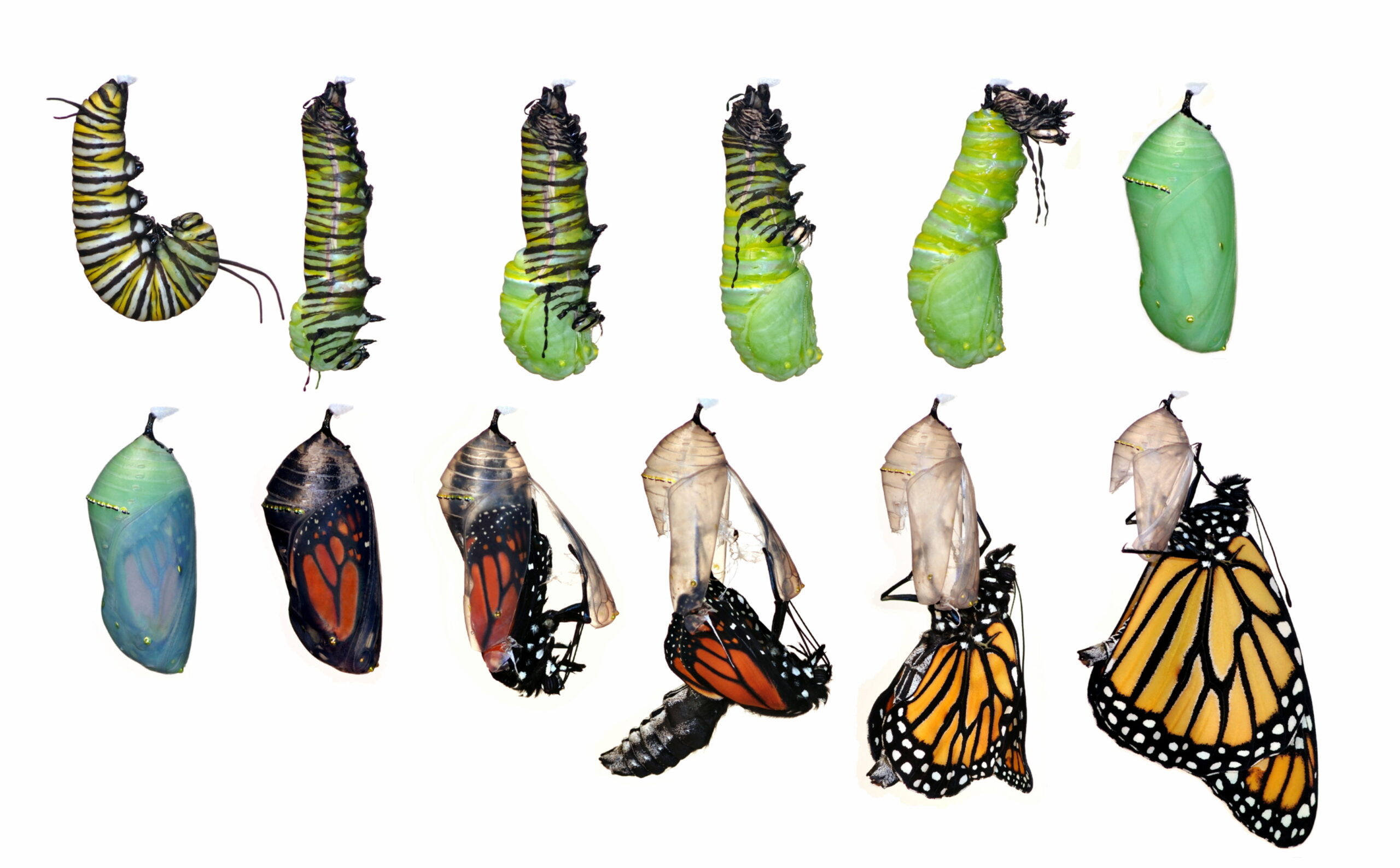
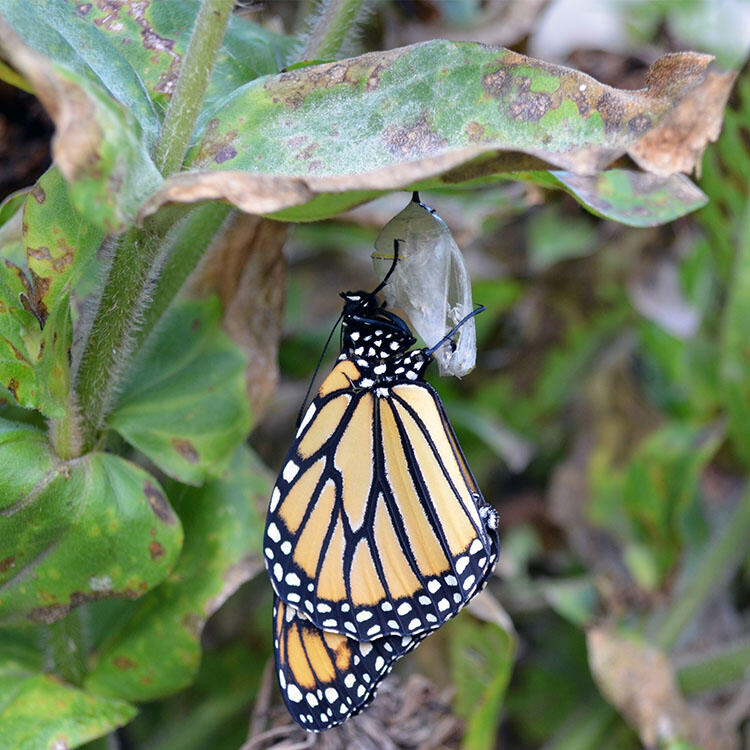
When development is complete, the adult butterfly emerges from the chrysalis in a process called eclosion. At first, the butterfly does not look ready to fly. Its wings are soft, wrinkled, and damp.
The newly emerged butterfly hangs downward and pumps fluid from its abdomen into the wings, expanding them to full size. This stage is delicate and time-sensitive. The wings need space and time to harden properly. Once they dry and the body is ready, the butterfly takes its first flight.
At that point, the focus of life changes again. Instead of nonstop feeding for growth, the adult butterfly feeds mainly on liquids such as nectar and turns its energy toward movement, mate-finding, and reproduction.
How Does a Caterpillar Turn into a Butterfly?
This is the question that makes butterfly metamorphosis feel almost unbelievable.
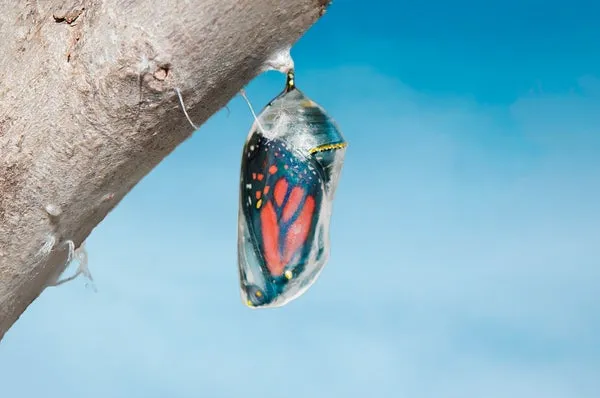
Inside the chrysalis, many larval tissues break down and are reorganized. At the same time, clusters of cells called imaginal discs—which have been present since earlier development—grow rapidly and form adult structures such as wings, legs, antennae, and eyes.
That is why the transformation is so dramatic. The caterpillar is not simply sprouting wings onto its old body. Its body is being extensively remodeled. Some tissues are broken down, some are preserved, and some are built into entirely new adult forms.
People sometimes describe this stage as the caterpillar “turning into soup.” That image captures the extremity of the change, although the real process is more organized than the phrase suggests. It is not random dissolution. It is a tightly regulated developmental program directed by hormones, genes, and specialized cell groups.
That is the real wonder of butterfly metamorphosis: not just that it happens, but that it happens with such precision.
Why Host Plants Matter in Butterfly Metamorphosis
One of the most overlooked parts of butterfly metamorphosis happens before the chrysalis ever forms: the choice of host plant.
Female butterflies do not lay eggs at random. In many cases, they must select a plant that their caterpillars can actually eat. Without the right host plant, the life cycle stops before it truly begins. That is why butterfly gardens often focus not only on flowers for adult butterflies, but also on larval host plants for caterpillars.
This distinction matters. Nectar plants help feed adult butterflies, but host plants support reproduction and development. If you want to support local butterfly populations, both are important.
It also explains why caterpillars can be so particular. Their diet is not a small preference. It is often the difference between survival and failure.
What Happens When a Butterfly Emerges?
The final stage of butterfly metamorphosis is one of the most fragile. Eclosion may happen quickly, but the moments afterward are critical.
After emerging, the butterfly must hang freely so gravity can help the wings expand properly. Fluids move into the wings, the body begins to stabilize, and the proboscis—the long feeding tube—comes together into a functional structure. Only after the wings have fully expanded and dried can the butterfly fly effectively.
This stage can be risky. If the butterfly does not have enough room, if the chrysalis is damaged, or if conditions are poor, the wings may not form correctly. That is why the quiet stillness of the chrysalis should not be mistaken for safety. The entire process depends on timing, structure, and a suitable environment.
Butterfly Metamorphosis as Science and Symbol
There is a reason butterfly metamorphosis continues to resonate with people who are not scientists. It is biologically real, but it also invites reflection. It makes visible something that is otherwise hard to see in nature: that profound change can happen in stages, often out of sight, and often with surprising outcomes.
Still, the science deserves just as much attention as the symbolism. Butterfly metamorphosis shows how specialized and interconnected life can be. Eggs depend on host plants. Caterpillars depend on food and defense. Pupae depend on protection and stored energy. Adults depend on functioning wings, nectar sources, and suitable habitat for reproduction.
In other words, the butterfly’s life cycle is not just beautiful. It is fragile. And that fragility reminds us that even the most familiar wonders of nature rely on healthy ecosystems.
Final Thoughts on Butterfly Metamorphosis
Butterfly metamorphosis is easy to summarize, but much harder to fully appreciate. The familiar four-stage life cycle—egg, larva, pupa, adult—contains an extraordinary amount of biological complexity. It is a story of growth, survival, transformation, and emergence.
Maybe that is why butterflies never stop drawing our attention. They are not only lovely to look at. They reveal something deeper about how life works: change is built into the system. Sometimes it is gradual, sometimes it is hidden, and sometimes it is astonishingly complete.
The next time you see a butterfly, it is worth remembering that you are looking at the final visible chapter of a much stranger and more intricate journey.
FAQ
What is butterfly metamorphosis?
Butterfly metamorphosis is the complete life cycle transformation of a butterfly through four stages: egg, larva (caterpillar), pupa (chrysalis), and adult butterfly.
How long does butterfly metamorphosis take?
The full process varies by species, climate, and season. Some butterflies complete metamorphosis in a few weeks, while others may take much longer, especially if they overwinter in one stage.
What happens inside a chrysalis?
Inside the chrysalis, the insect undergoes major internal reorganization. Many larval tissues break down, while specialized cell groups develop into adult structures such as wings, legs, eyes, and antennae.
Do all butterflies go through the same four stages?
Yes, butterflies undergo complete metamorphosis, which includes the same four basic stages. However, the timing, appearance, and behavior at each stage can vary a lot from one species to another.
Why do butterflies lay eggs on specific plants?
Most butterfly species rely on host plants that their caterpillars can eat after hatching. If the eggs are laid on the wrong plant, the caterpillars may not survive.
What is the difference between a chrysalis and a cocoon?
A chrysalis is the pupal stage of a butterfly. A cocoon is a silk covering spun by many moth caterpillars around the pupa. Butterflies usually form a chrysalis rather than a cocoon.