Butterfly watching is one of the easiest ways to step into the world of nature observation. You do not need expensive equipment, you do not have to wake up before sunrise, and you do not need to know every tiny detail about insects before you begin.
In fact, many of the best common butterflies for beginners are large, colorful, and often found in ordinary places: gardens, parks, roadsides, meadows, woodland edges, and even city balconies with the right plants.
The trick is not to try to identify every butterfly at once. Start with the obvious ones — the big yellow swallowtails, the bright orange monarchs, the small white cabbage butterflies, and the early spring blues. Once you learn these familiar species, the smaller and more confusing butterflies become much easier to understand.
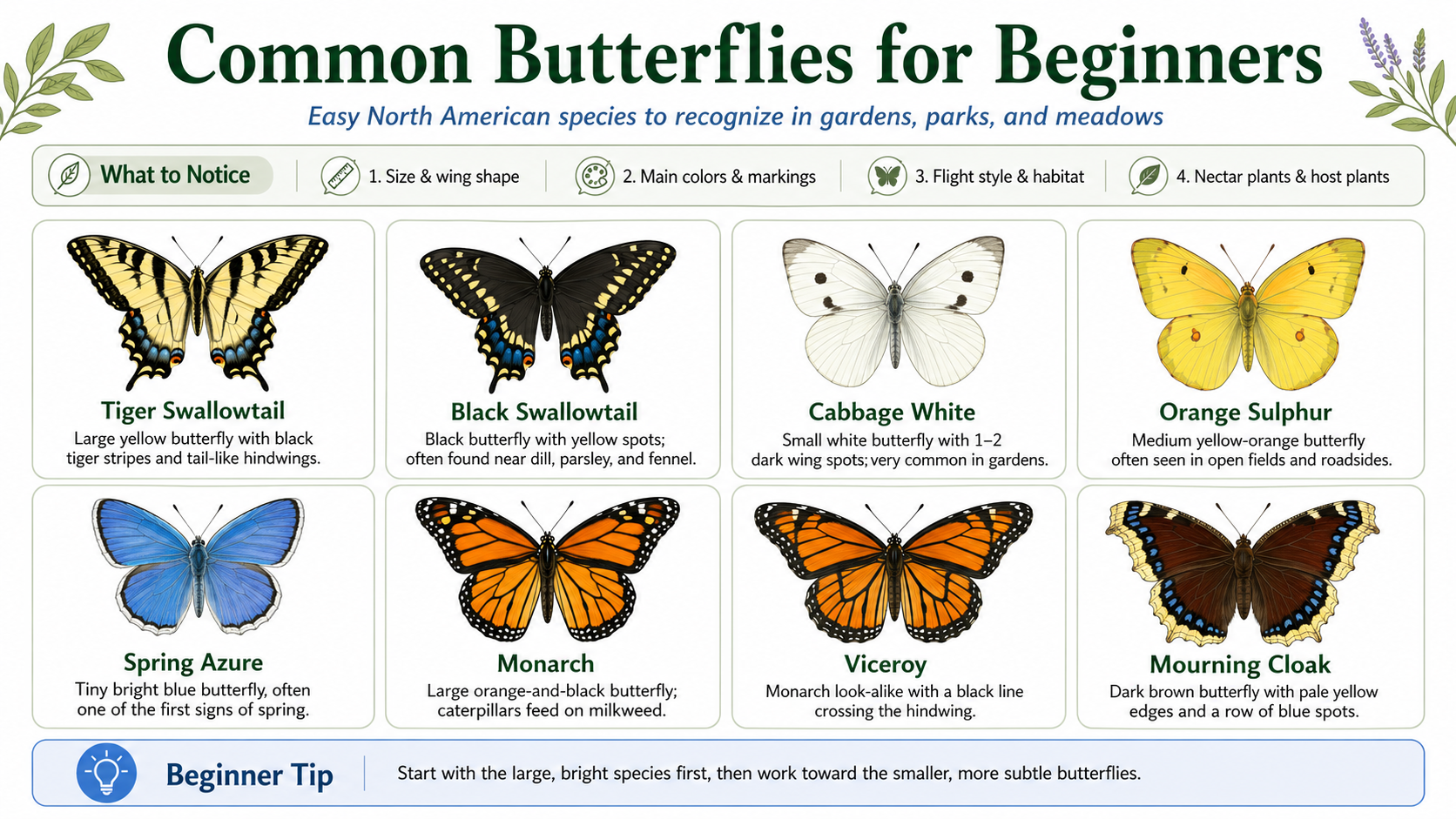
This guide introduces ten common butterflies that are especially good for beginners, along with simple field marks, where to look for them, and what plants may attract them.
Why Butterflies Are Great for Beginner Naturalists
Butterflies are a friendly starting point for anyone interested in insects. Many species are active during the day, especially in warm sunshine, so they are much easier to watch than many nocturnal insects.
They also do not bite or sting, and many are approachable enough to observe with the naked eye or a phone camera. Some species return to the same flowers again and again, giving you time to notice their wing patterns, colors, and behavior.
For beginners, it helps to focus on three things:
- Size – Is the butterfly large, medium, or small?
- Color pattern – Is it yellow, orange, white, blue, brown, or black?
- Behavior and habitat – Is it visiting flowers, flying low in grass, gliding through woods, or basking in the sun?
Once you begin noticing these clues, butterfly identification becomes much less intimidating.
Common Butterflies for Beginners: 10 Species to Know
Below are ten beginner-friendly butterflies commonly seen in North America. Some are widespread across the continent, while others may vary by region, but all are good examples for learning basic butterfly identification.
1. Tiger Swallowtail
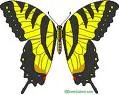
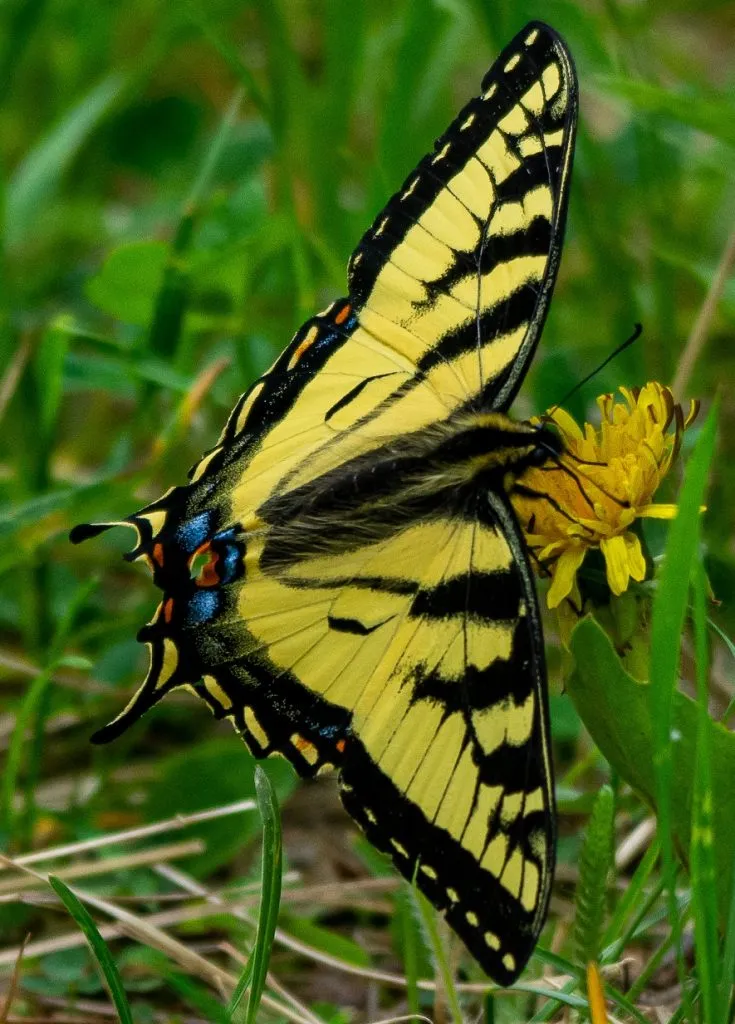
Tiger swallowtails are among the most impressive butterflies a beginner can learn. They are large, bright yellow, and marked with bold black stripes, much like the pattern of a tiger. Their name also comes from the “swallowtail” shape of the hindwings, which have narrow tail-like extensions.
These butterflies are often seen gliding around woodland edges, gardens, and open sunny areas. They are hard to miss because of their size and graceful flight.
A good beginner clue is this: if you see a large yellow butterfly with black tiger-like stripes and tails on the hindwings, you are likely looking at a tiger swallowtail or one of its close relatives.
Where to look: Gardens, forest edges, meadows, parks
Beginner ID clue: Large yellow wings with black tiger stripes
Host plants: Wild cherry, black cherry, chokecherry, tulip tree, and other regional host trees
Tiger swallowtails are also excellent garden visitors. If your yard has nectar flowers and nearby host plants, you may be lucky enough to see them regularly.
2. Black Swallowtail
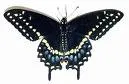
The black swallowtail is another large and beautiful butterfly that beginners often notice in gardens. It is mostly black with yellow markings, and females often show more blue on the hindwings.
One reason this species is so enjoyable for beginners is that its caterpillars are fairly easy to find. If you grow parsley, dill, fennel, rue, or related herbs, you may eventually notice green, black, and yellow-striped caterpillars feeding on the leaves.
This is a wonderful way to watch the butterfly life cycle up close.
Where to look: Gardens, open fields, city parks, herb beds
Beginner ID clue: Black butterfly with yellow spots and sometimes blue markings
Host plants: Parsley, dill, fennel, rue, Queen Anne’s lace
One important note: black swallowtail caterpillars are sometimes confused with monarch caterpillars because both have bold stripes. The plant gives you the answer. Monarch caterpillars feed on milkweed, while black swallowtail caterpillars feed on plants in the carrot family, such as parsley and dill.
3. Cabbage White
The cabbage white may not be the most glamorous butterfly, but it is one of the best species for beginners because it is so common. In many parts of North America, if you see a small white butterfly fluttering through a garden, lawn, or roadside, there is a good chance it is a cabbage white.
This species was introduced from Europe and has become widespread. Its caterpillars feed on plants in the mustard family, including cabbage, broccoli, kale, and related garden vegetables.
Where to look: Gardens, farms, lawns, roadsides, parks
Beginner ID clue: Small white butterfly with black dots on the wings
Host plants: Cabbage, mustard plants, broccoli, kale, and related plants
Males usually have one black spot on each forewing, while females often have two. That simple difference makes cabbage whites a useful species for practicing close observation.
4. Orange Sulphur
The orange sulphur is a medium-sized butterfly whose color ranges from yellow to orange. It is often seen flying low over fields, meadows, roadsides, and open grassy areas.
At first glance, sulphurs may look like “yellow cabbage whites,” but they belong to a different group. Their warm yellow-orange color and active, fluttering flight make them fairly easy to recognize once you know what to look for.
Where to look: Alfalfa fields, meadows, roadsides, open grasslands
Beginner ID clue: Yellow to orange butterfly, usually medium-sized
Host plants: Alfalfa, clover, and other legumes
Orange sulphurs are especially common in agricultural and open habitats. In some places, they can appear in large numbers, particularly around fields rich in legumes.
5. Spring Azure
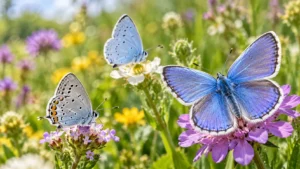
Spring azures are small butterflies, but their bright blue color makes them a favorite among early-season butterfly watchers. For many people, seeing the first azure of the year feels like a sign that winter is finally loosening its grip.
They are among the first butterflies to appear in spring. Their blue upperwings can flash brightly in sunlight, although when they land with wings closed, they may look pale and more subtle.
Where to look: Woodland edges, gardens, trails, shrubby areas
Beginner ID clue: Small, delicate butterfly with blue upperwings
Host plants: Vary by region, including flowering shrubs and trees
There are many species of blues, and some are difficult to tell apart. For beginners, it is enough to recognize them as small blue butterflies in the gossamer-wing family. Over time, you can learn the finer differences.
6. Mourning Cloak
The mourning cloak is one of the most distinctive butterflies in North America. It is large, dark brown to almost black, with pale yellow wing edges and a row of blue spots near the border.
Unlike many butterflies, mourning cloaks overwinter as adults. That means they can appear very early in the year, sometimes even on warm winter days.
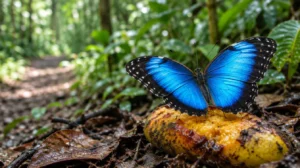
They are not always seen visiting flowers. Instead, adults often feed on tree sap, rotting fruit, and other natural sources of moisture and minerals.
Where to look: Woodlands, parks, tree-lined paths, streamsides
Beginner ID clue: Dark wings with pale yellow edges
Host plants: Willows, elms, poplars, birches
For beginners, the mourning cloak is a rewarding species because its pattern is so recognizable. If you see a large dark butterfly with a cream-yellow border, you can feel fairly confident about the identification.
7. Question Mark and Comma Butterflies
Question mark and comma butterflies belong to a group often called anglewings. Their wings have irregular, scalloped edges that can look almost leaf-like when the butterfly is resting.
Their names come from small silvery marks on the underside of the hindwings. In one species, the mark looks like a question mark; in another, it resembles a comma.
When their wings are closed, these butterflies can blend into bark and dead leaves. But when they open their wings, they often reveal rich orange and brown patterns above.
Where to look: Woodland edges, trails, gardens, parks
Beginner ID clue: Jagged wing edges and silver punctuation-like marks underneath
Host plants: Vary by species; may include nettles, elms, hops, and related plants
These butterflies are a good reminder that not every butterfly is best identified by color alone. Wing shape, resting posture, and underside markings can be just as important.
8. Monarch
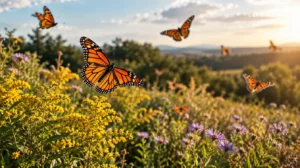
The monarch is probably the most famous butterfly in North America. It is large, orange and black, and strongly associated with migration. In late summer and fall, monarchs may gather in noticeable numbers as they move south.
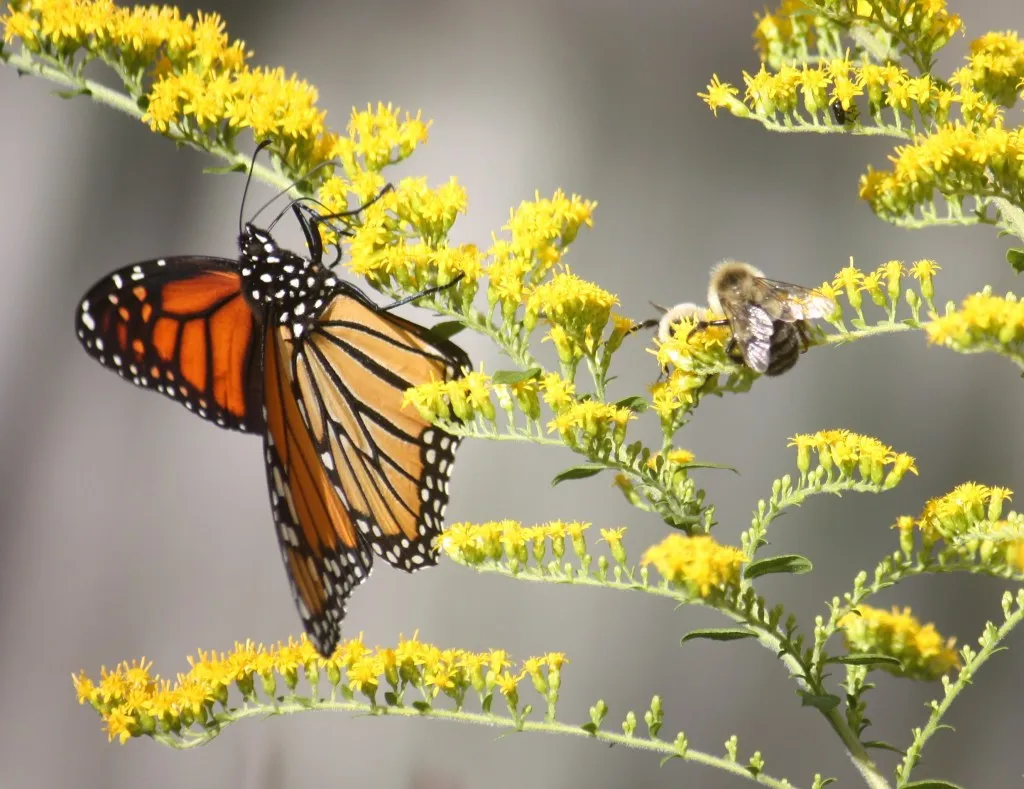
Monarchs are also famous for their relationship with milkweed. Their caterpillars feed only on milkweed plants, which contain chemicals that make the butterflies distasteful to many predators.
Where to look: Meadows, gardens, fields, roadsides, milkweed patches
Beginner ID clue: Large orange butterfly with black veins and white-spotted black borders
Host plants: Milkweed species
For beginner butterfly watchers, monarchs are a perfect species to learn because they connect identification, migration, gardening, and conservation in one beautiful insect.
If you want to attract monarchs, planting native milkweed is one of the most important steps. Nectar flowers are useful for adults, but milkweed is essential for their caterpillars.
9. Viceroy
The viceroy is often mistaken for a monarch, and that makes it an excellent butterfly for beginners to study. At first glance, it has a similar orange-and-black pattern. But there is one useful clue: the viceroy has a black line crossing the hindwing, which monarchs do not have.
Viceroys are usually a little smaller than monarchs, though size can be hard to judge in the field.
Where to look: Wet meadows, marsh edges, streamsides, open areas near willows
Beginner ID clue: Looks like a monarch but has a black line across the hindwing
Host plants: Willows, poplars, cottonwoods
Learning the difference between monarchs and viceroys is one of the classic early lessons in butterfly identification. Once you spot the hindwing stripe, the two become much easier to separate.
10. Gray Hairstreak
The gray hairstreak is smaller and more subtle than the large showy butterflies above, but it is still a good species for beginners because it is widespread and fairly distinctive.
It is usually gray below, with a small orange spot near the hindwing and fine tail-like projections. These “tails” can help distract predators by drawing attention away from the butterfly’s head.
Gray hairstreaks may perch with their wings closed, making the underside pattern especially important for identification.
Where to look: Gardens, fields, roadsides, open habitats
Beginner ID clue: Small gray butterfly with tiny tails and an orange hindwing spot
Host plants: Many plants, including mallows, legumes, and other broadleaf plants
Because hairstreaks are small, they encourage patience. Watch where they land, approach slowly, and look for the orange spot and thin tails.
A Simple Beginner Guide to Butterfly Families
As you become more comfortable with common butterflies, it helps to recognize the main butterfly families. You do not need to memorize everything at once, but family-level identification can make the whole process easier.
Swallowtails
Swallowtails are usually large and graceful, often with tail-like extensions on the hindwings. Tiger swallowtails and black swallowtails are two beginner-friendly examples.
Whites and Sulphurs
These are mostly white, yellow, or orange butterflies. Cabbage whites and orange sulphurs are common examples. They are often seen in gardens, fields, and open sunny places.
Gossamer-Wings
This family includes blues, coppers, and hairstreaks. Many are small but beautiful. Spring azures and gray hairstreaks are good beginner examples.
Brushfoots
This is a large and diverse family that includes monarchs, viceroys, mourning cloaks, painted ladies, admirals, fritillaries, crescents, and anglewings. Many are colorful, but some can be tricky for beginners.
Skippers
Skippers are small, fast-flying butterflies with stout bodies and hooked antennae. They often dart quickly from flower to flower. They can be challenging at first, but once you recognize their shape and flight style, they become easier to notice.
How to Start Watching Butterflies
You do not need much to begin. A sunny day, a few flowering plants, and a little patience are enough.
The best time to look for butterflies is usually late morning through afternoon, when the sun is warm and flowers are open. Butterflies are more active in calm weather, so choose days that are sunny but not too windy.
Bring a phone or camera if you can. A photo lets you check markings later without having to chase the butterfly. Try to photograph both the upper side and underside of the wings if possible, because some species look very different depending on whether their wings are open or closed.
A notebook can also help. Record the date, location, weather, flower type, and butterfly behavior. Over time, you will start noticing seasonal patterns.
How to Attract Common Butterflies to Your Garden
A butterfly-friendly garden needs two kinds of plants: nectar plants for adults and host plants for caterpillars.
Nectar plants provide food for adult butterflies. Good choices often include native wildflowers, milkweed, asters, coneflowers, blazing star, goldenrod, Joe-Pye weed, verbena, and other regionally appropriate flowers.
Host plants are where butterflies lay eggs and where caterpillars feed. These are often more specific. Monarchs need milkweed. Black swallowtails use parsley, dill, fennel, and related plants. Tiger swallowtails may use wild cherry and other trees. Gray hairstreaks use a wide range of plants, including mallows and legumes.
If you want more butterflies, avoid thinking only about pretty flowers. A garden that supports caterpillars is far more valuable than one that only offers nectar.
Also, avoid pesticides whenever possible. Caterpillars are insects too, and many sprays that kill garden pests can also harm butterflies at different life stages.
Final Thoughts
Learning butterflies does not have to feel overwhelming. Start with the large, colorful, common species. Notice their size, color, wing shape, flight style, and favorite plants. Before long, you will begin recognizing familiar visitors in your yard, local park, or favorite walking trail.
The best part is that butterfly watching changes with the seasons. Spring may bring azures and mourning cloaks. Summer may bring swallowtails, sulphurs, hairstreaks, and cabbage whites. Late summer and fall may bring monarchs and painted ladies moving through flowers before migration.
Once you learn the common butterflies for beginners, every sunny walk becomes more interesting. A flutter of orange, a flash of blue, or a yellow shape drifting over the grass may suddenly become a species you know by name.
And that is when butterfly watching becomes addictive in the best possible way.
FAQ
What are the easiest butterflies for beginners to identify?
Some of the easiest butterflies for beginners to identify include monarchs, tiger swallowtails, black swallowtails, cabbage whites, orange sulphurs, mourning cloaks, and viceroys. These species are usually noticeable because of their size, color, pattern, or common garden presence.
What is the most common butterfly in North America?
The cabbage white is one of the most common butterflies in North America. It is a small white butterfly often seen in gardens, lawns, farms, and roadsides. Monarchs, sulphurs, swallowtails, and painted ladies are also common in many regions.
How can I tell a monarch from a viceroy?
Monarchs and viceroys both have orange-and-black wings, but the viceroy has a black line crossing the hindwing. Monarchs do not have this line. Viceroys are also often slightly smaller, but the hindwing stripe is the easiest field mark.
What time of day is best for butterfly watching?
Late morning through afternoon is usually best, especially on warm, sunny, calm days. Butterflies rely on warmth and sunlight, so they are often less active in cold, cloudy, rainy, or windy weather.
What plants attract butterflies?
Adult butterflies are attracted to nectar-rich flowers such as milkweed, asters, coneflowers, goldenrod, blazing star, verbena, and many native wildflowers. To support caterpillars, you also need host plants, such as milkweed for monarchs, parsley and dill for black swallowtails, and wild cherry for tiger swallowtails.
Do I need special equipment to identify butterflies?
No. You can begin with your eyes, a phone camera, and a simple field guide or identification app. A close-focus pair of binoculars can help, but it is not necessary when you are just starting.
Are skippers butterflies or moths?
Skippers are butterflies, although they often look a little different from the more familiar graceful butterflies. They usually have stout bodies, quick darting flight, and hooked antennae tips.
Why are host plants important for butterflies?
Host plants are the plants that butterfly caterpillars need to eat. Adult butterflies may visit many flowers for nectar, but caterpillars are often much more selective. Without host plants, butterflies cannot complete their life cycle.