There is something unmistakably summery about seeing butterflies drift across a garden border or settle on a patch of wildflowers. If you have ever paused beside a hedge, a meadow, or even a small urban garden and wondered what you were looking at, this guide to common butterflies in the UK is a good place to start.
The UK has a surprisingly rich butterfly population, and some species are regular visitors to gardens, parks, hedgerows, and woodland edges. The nice thing is that you do not need to be an expert to begin identifying them. In fact, a slightly overcast day is often ideal, because butterflies tend to be less active and stay still for longer, giving you a much better look at their markings.
Below, I will walk through why butterflies matter, why they need a little more help now than they once did, and the common British species you are most likely to spot.
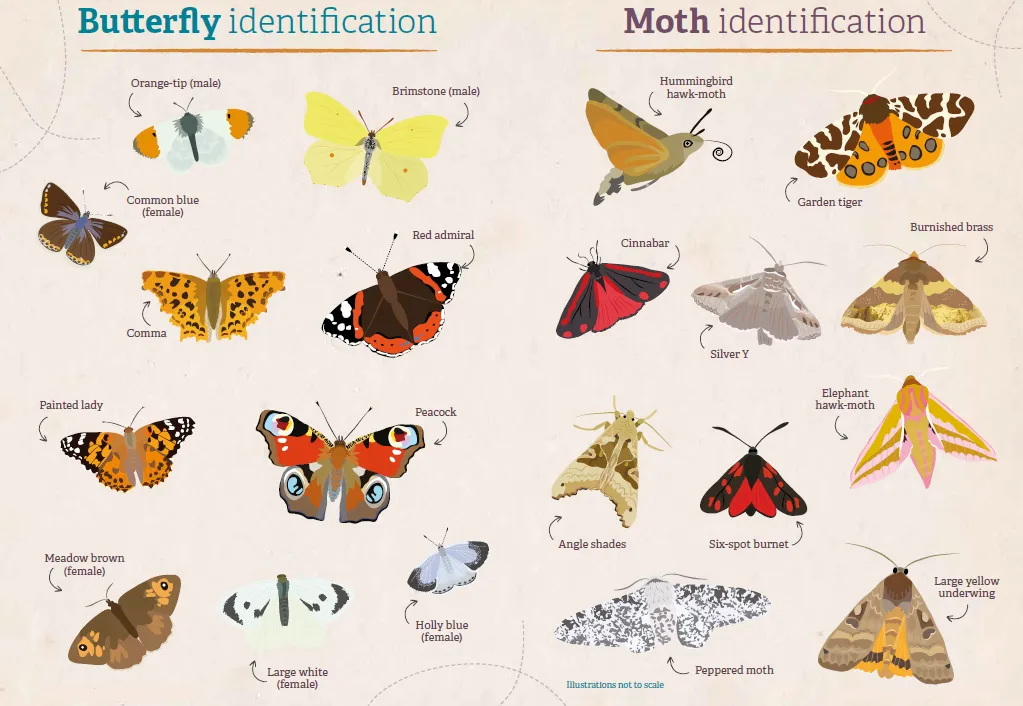
Why common butterflies in the UK matter
Butterflies are much more than pretty visitors. They play a practical role in the environment by helping with pollination. As they move from flower to flower drinking nectar through their long proboscis, pollen sticks to their bodies and is carried to the next bloom. That transfer helps plants reproduce and supports wider ecosystems.
They are also a useful sign of environmental health. When butterfly numbers are stable, it usually suggests that habitats, food plants, and seasonal conditions are still working reasonably well together. When butterfly populations fall, it can be an early warning that something is off.
And butterflies are not only important in their adult form. Caterpillars are a key food source for birds and other wildlife, especially in spring when many chicks depend on soft-bodied insects.
Why common butterflies in the UK need our help
Sadly, many butterfly species in Britain have declined over time. Even some once-familiar species are being seen less often in certain places. The biggest pressures are not hard to spot: habitat loss, pesticide use, and climate change all make life harder for butterflies at different stages of their life cycle.
The encouraging part is that small changes can help. Leaving a corner of the garden a little wilder, planting nectar-rich flowers, and allowing caterpillar food plants such as nettles or native grasses to remain in place can make a real difference. Butterfly-friendly spaces do not have to be large. A modest patch of wild planting can still be valuable.
How to identify common butterflies in the UK
If you are new to butterfly spotting, start with a few simple clues:
Look at the main wing colour first. Orange, white, brown, blue, or black patterns usually narrow things down quickly.
Then check for obvious details. Eyespots, scalloped edges, orange wing tips, green veining, or bright blue upper wings can be enough for a confident ID.
It also helps to note where you saw it. Some butterflies prefer gardens and hedgerows, while others are more often found in woodland, open grassland, or damp meadows.
Once you begin noticing those details, the common species become much easier to tell apart.
15 common butterflies in the UK you are likely to see
1. Orange-tip
One of the loveliest butterflies of spring, the orange-tip is easy to recognise once you know what to look for. Males have bright orange wing tips, while females do not, which can make them slightly trickier to identify at first glance. Both sexes have beautifully mottled green underwings.
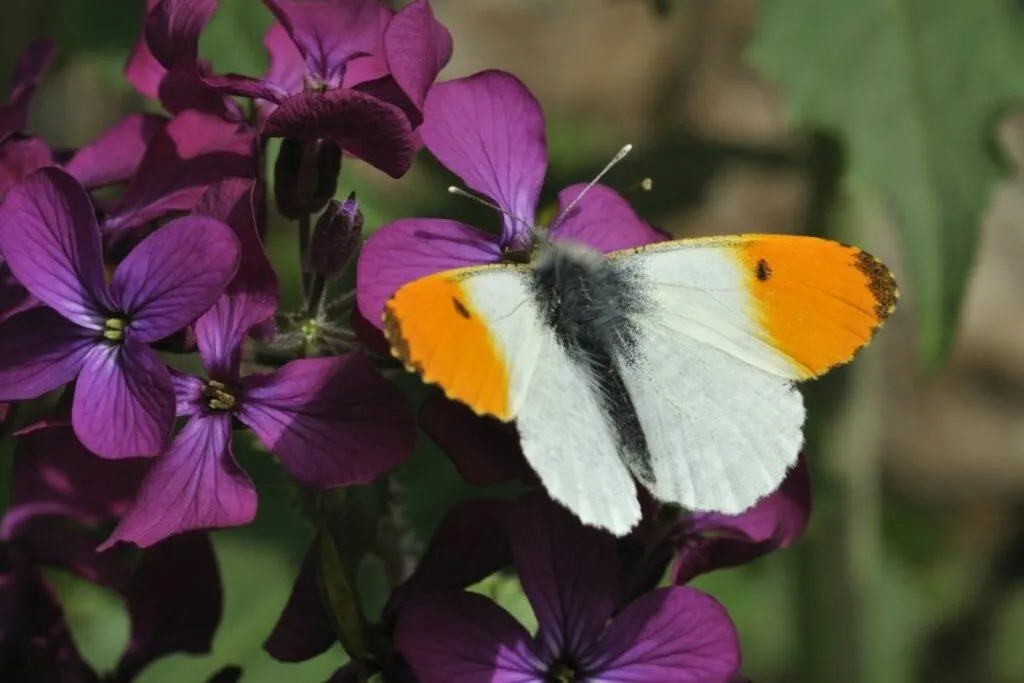
You will often see them in gardens, hedgerows, and meadows during spring.
2. Brimstone
The brimstone is one of those butterflies that really does look a bit leaf-like in flight. Its angular wings are distinctive, and the males are usually a stronger yellow-green than the paler females.
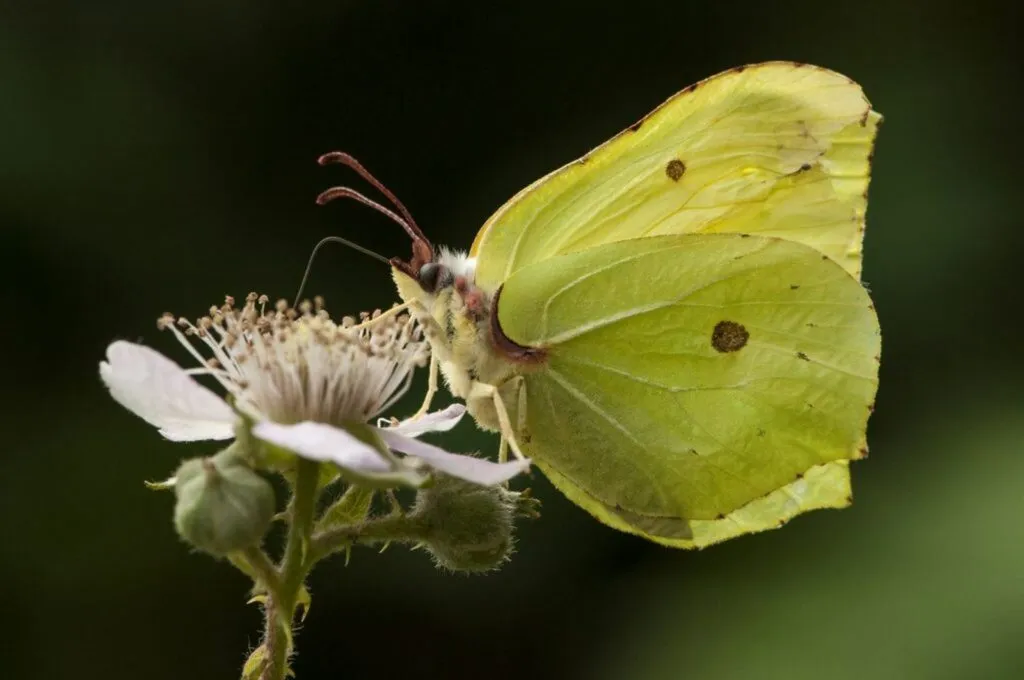
They are often among the first butterflies to appear in spring, which makes them a welcome sight after winter.
3. Large White
This is one of the most familiar common butterflies in the UK, especially in gardens. It is a strong flyer with mostly white wings and bold black tips on the forewings. Females usually have two black spots on the forewings.
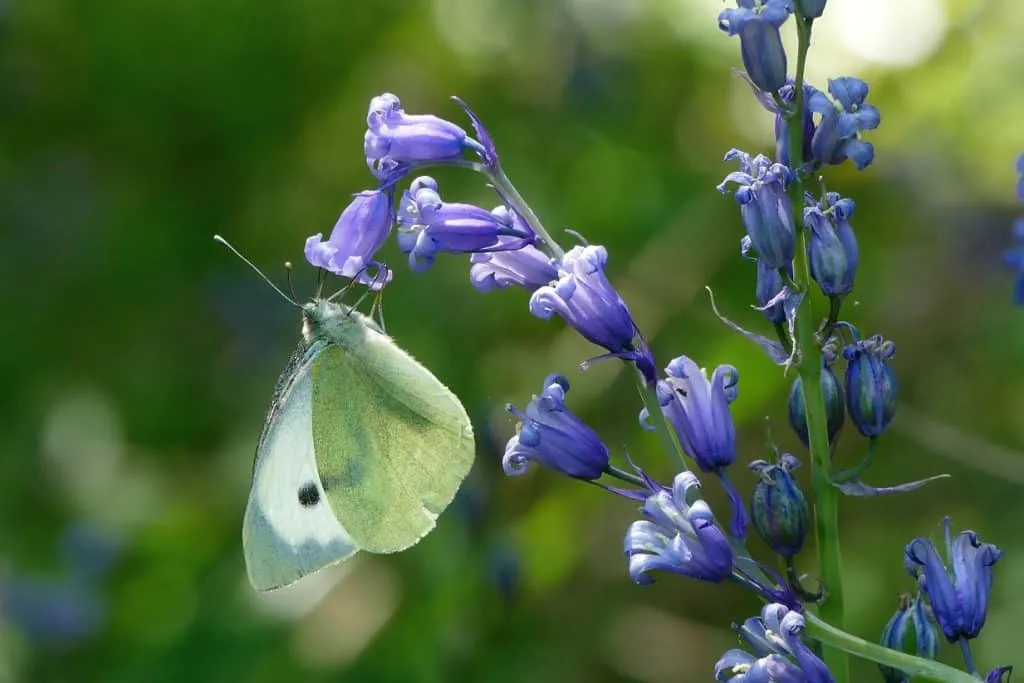
If you grow cabbages or other brassicas, you may know this species rather well.
4. Small White
Very similar to the large white, but smaller and generally a little neater-looking, the small white is another regular garden visitor. The black wing tips are less extensive, and the spots can vary.
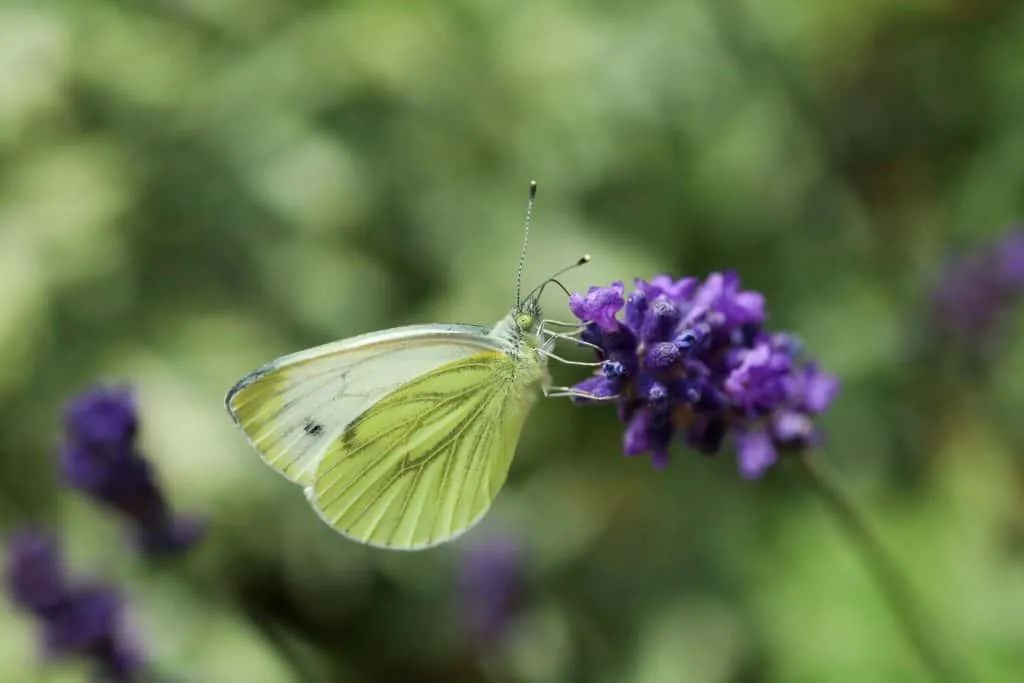
It is common, active, and often one of the easiest butterflies to spot around homes and allotments.
5. Green-veined White
At first glance, this species can look like another small white. The giveaway is in the name: the underwings show clear greenish veins, especially when the butterfly is at rest.
Once you see that pattern properly, it becomes much easier to separate from other white butterflies.
6. Small Tortoiseshell
This is one of the most attractive and recognisable butterflies in Britain. Its wings are bright orange with black and yellow markings, edged with a row of blue spots.
It is widespread and often seen in gardens. If you notice a vivid orange butterfly basking in the sun with a bold, decorative pattern, this is a strong candidate.
7. Painted Lady
The painted lady is a migrant species, and in some years it appears in impressively large numbers across the UK. It has orange-brown wings with black and white markings, though it is usually paler and larger than the small tortoiseshell.
It is one of those butterflies that always feels a little special to see.
8. Peacock
Few butterflies are easier to recognise than the peacock. Each wing carries a large eyespot, giving it a dramatic appearance that seems designed to stop predators in their tracks.
When the wings are closed, though, the underside is dark and surprisingly leaf-like. That contrast makes this species especially interesting to watch.
9. Red Admiral
The red admiral is a bold, handsome butterfly with dark wings marked by striking red or orange bands and white spots near the forewing tips.
It is a strong flyer, very common in gardens, and often seen visiting late-season flowers or even fallen fruit.
10. Comma
The comma is one of my personal favourites because it looks so crumpled and leaf-like when the wings are closed. Open, however, the wings are bright orange with black spotting and ragged, scalloped edges.
Its name comes from the small white comma-shaped mark on the underwing.
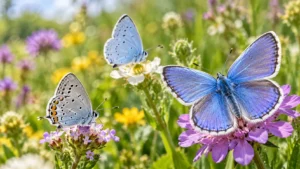
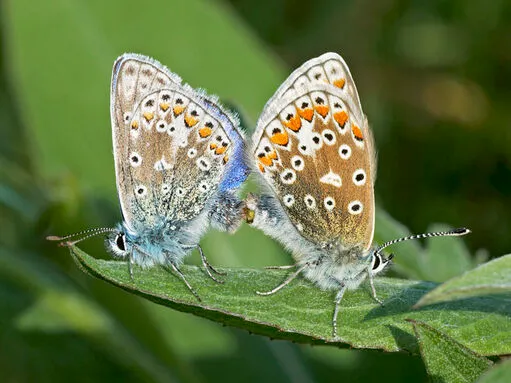
11. Common Blue
The common blue is the most widespread blue butterfly in the UK. Males are usually a bright, clean blue, while females are more variable and often browner with orange spots.
You are most likely to see this species in grassy places rather than deep woodland or heavily shaded gardens.
12. Speckled Wood
If you spend time near woodland paths, hedgerows, or shady gardens, you will probably come across the speckled wood. It is chocolate brown with pale yellow or cream speckles, plus darker eye-like markings near the wing edges.
It often flutters in dappled sunlight, which somehow suits it perfectly.
13. Meadow Brown
The meadow brown is one of the most abundant butterflies in Britain. It is not the flashiest species, but it is everywhere in summer grasslands and field margins. The wings are mainly brown, often with orange patches and dark eye spots.
Once you start looking for them, you will realise just how common they are.
14. Ringlet
The ringlet is a dark brown butterfly that can look plain from a distance, but up close it has a gentle beauty of its own. The underwings show a row of small ringed spots, though these can vary quite a bit.
It is often seen in grassy habitats and is especially common in mid to late summer.
15. Gatekeeper
The gatekeeper is another classic summer butterfly, often found alongside meadow browns and ringlets. It is warm brown with orange patches and usually shows small dark spots on the wings.
It likes hedgerows, sunny field edges, and scrubby grassland, and it is one of those species that tends to appear when summer is at its height.
Where to see common butterflies in the UK
The good news is that you do not need to travel far. Many of these species can be seen in ordinary places if the habitat is right. Gardens with flowering plants, hedgerows left a little untidy, meadows, woodland margins, and even urban green spaces can all support butterflies.
If you want a better chance of seeing them up close, slow down and look on calm days. Butterflies often settle to bask, feed, or rest, and that is usually the best moment for identification.
How to attract common butterflies in the UK to your garden
If you would like more butterflies in your garden, the best approach is simple: give them food and a place to live.
Nectar-rich flowers are important for adults, especially across a long season from spring into autumn. Native plants, wildflower patches, and flowering herbs can all help. It is equally important to think about caterpillars. Many species need specific food plants, and a perfectly tidy garden is often less useful than one with a slightly wild edge.
Avoiding pesticides, leaving some areas unmown for longer, and allowing a few “messy” corners can make your garden far more butterfly-friendly than you might expect.
A final thought on common butterflies in the UK
Butterfly watching is one of the easiest ways to feel more connected to the seasons. You do not need special equipment, and you do not need to travel to a nature reserve. Sometimes all it takes is ten quiet minutes in the garden to notice how much is already there.
Learning the common butterflies in the UK is also a good reminder that ordinary wildlife is worth paying attention to. The species above may be familiar, but they are no less remarkable for that. And the more familiar we become with them, the more likely we are to protect the spaces they depend on.
FAQ
What are the most common butterflies in the UK?
Some of the most common butterflies in the UK include the large white, small white, brimstone, peacock, red admiral, small tortoiseshell, meadow brown, speckled wood, gatekeeper, and common blue.
When is the best time to see common butterflies in the UK?
Spring and summer are usually best, though some species appear earlier than people expect. Brimstones, for example, can be among the first butterflies seen in spring, while meadow browns, ringlets, and gatekeepers are often more noticeable later in summer.
How can I identify common butterflies in the UK?
Start with size, wing colour, and obvious markings. Eyespots suggest peacock, orange wing tips suggest orange-tip, green veining points to green-veined white, and scalloped wings with a white mark underneath suggest comma.
Which common butterflies in the UK are often seen in gardens?
Large white, small white, red admiral, peacock, small tortoiseshell, brimstone, and speckled wood are all regular garden visitors, especially where there are nectar-rich flowers and sheltered sunny spots.
How can I help butterflies in my garden?
Plant nectar-rich flowers, avoid pesticides, leave some areas a little wild, and include caterpillar food plants where possible. Even a small garden can support butterflies if it offers food, shelter, and a bit of seasonal variety.